
Menzies' beech
Nothofagus menziesii
Description
Growing requirements
Menzies' beech, scientifically known as Nothofagus menziesii, is an iconic evergreen tree belonging to the family Nothofagaceae. It is native to New Zealand, where it stands as a dominant species in temperate rainforest ecosystems.
The tree thrives in cool, humid maritime climates. It requires consistent rainfall and protection from extreme temperature fluctuations to maintain its healthy growth. It is not adapted to regions with prolonged dry spells or intense summer heat.
Regarding soil, Menzies' beech prefers well-drained, fertile sites with a slightly acidic profile. Proper site selection is crucial, as the tree performs poorly in heavy, waterlogged soils where oxygen availability to the roots is restricted.
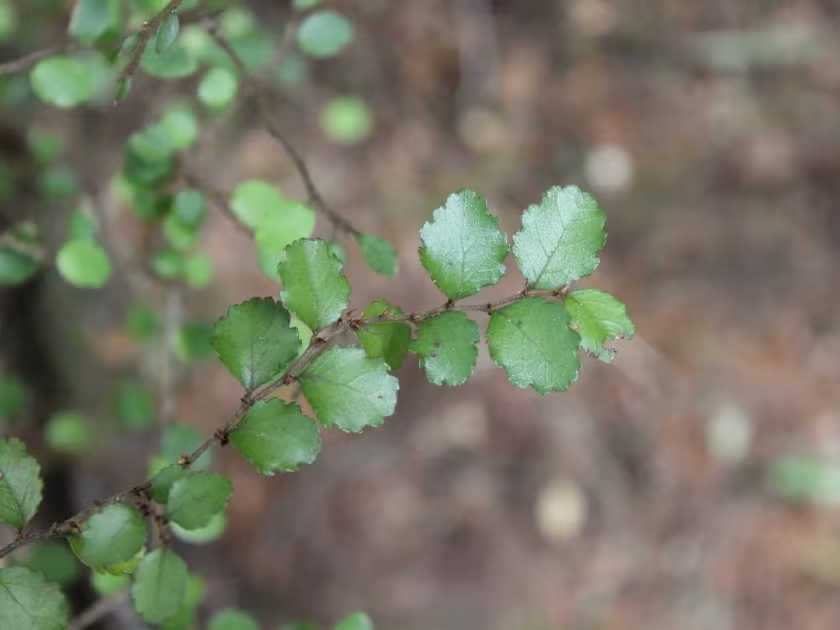
Botanically, it is identified by its distinctive silvery-grey bark, which provides a striking appearance in mature specimens. Its small, dark green leaves with serrated margins are designed to withstand high-altitude conditions and variable winds.
Economically, the species is highly regarded for its timber properties. The wood is dense, strong, and even-grained, making it suitable for high-end cabinetry, flooring, and various industrial applications where durability is required.
Main diseases and pests
The primary threats include fungal diseases such as Phytophthora, which can severely impact tree health in waterlogged environments. Additionally, pest infestations, including various wood-boring beetles, typically target stressed individuals within forest stands.