
Hard beech
Nothofagus truncata
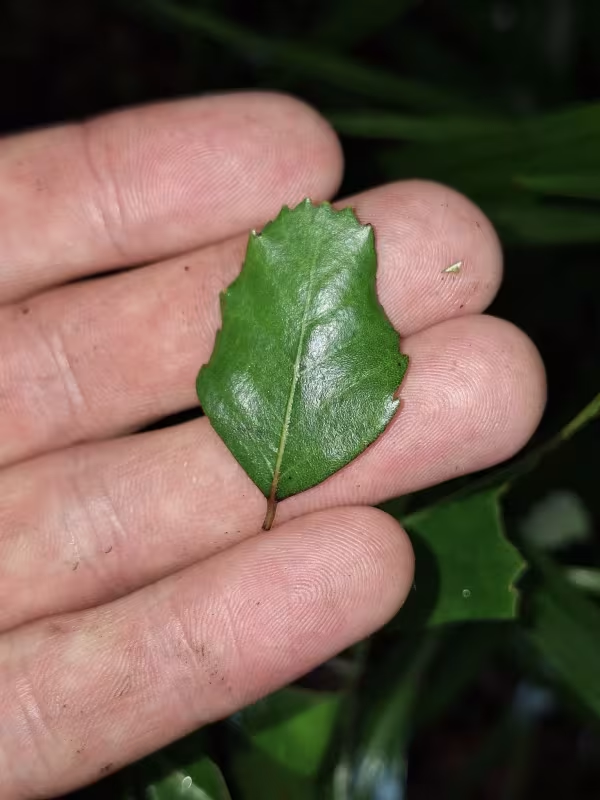
Description
Growing requirements
Hard beech (Nothofagus truncata) is a majestic evergreen tree belonging to the Nothofagaceae family. Native to New Zealand, it is highly valued for its extremely dense, durable timber, often referred to as iron-hard wood.
The tree thrives in moist, well-drained, fertile soils in regions with mild temperate climates. It requires consistent rainfall and dislikes stagnant water or waterlogged substrates, which can lead to rapid root decay.
Climate requirements include protection from extreme drought and severe frosts. Nothofagus truncata performs best in sites with high atmospheric humidity, which is typical for its indigenous rainforest environments.
Silvicultural practices involve careful selection of planting sites and spacing to ensure proper canopy development. Pruning young trees is essential to encourage straight trunk growth, which significantly increases the timber value at maturity.
Economically, Nothofagus truncata is a premium species for cabinet making, construction, and high-quality flooring. It is also increasingly used in sustainable forestry projects due to its ability to regenerate naturally.
Main diseases and pests
Pathogenic fungi are the primary threats to Nothofagus truncata, particularly in poorly drained soils. Root rot pathogens can decimate young stands if soil aeration is not maintained appropriately.
Insect pests, such as various species of scale insects and borers, can attack the wood and leaves of stressed trees. Monitoring the general health and vitality of the stand is key to early detection.
Herbivory, particularly from deer, is a major challenge for regeneration. Without adequate protection, new seedlings are frequently browsed, leading to stunted growth or total loss of the young crop.
Environmental stress caused by climate change, such as irregular precipitation patterns, can predispose these trees to secondary infections. Maintaining soil moisture during critical growing seasons is highly recommended.
- Monitor for leaf spotting and discolouration.
- Ensure adequate fencing against wildlife.
- Avoid soil compaction during maintenance.
- Remove heavily infested or diseased trees.
- Promote biodiversity to encourage natural pest predators.