
Lewisia hybrid
Lewisia columbiana (Howell ex A. Gray) B. L. Rob. x Lewisia cotyledon (S. Watson) B. L. Rob.
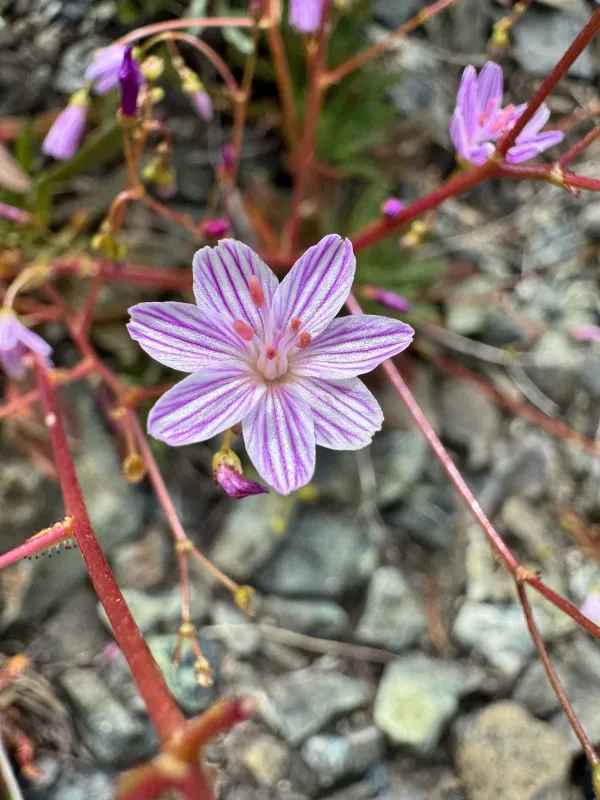
Description
Sowing dates
Seeds of Lewisia hybrid require cold stratification to break dormancy. Sowing in late autumn or early winter allows the natural temperature fluctuations to stimulate germination.
A well-draining, mineral-based substrate is essential for seed germination. Use a mix of coarse sand, perlite, and a small amount of fine compost to maintain structural integrity.
Maintain the seeds at approximately 5°C (41°F) for several weeks. This period of cold treatment is crucial for uniform germination in the spring when temperatures rise.
Once seedlings emerge, they should be placed in a bright location but shielded from intense direct sunlight. Gentle airflow is necessary to prevent damping-off diseases during the early stages.
Transplanting should be done with extreme care. Lewisia possesses a deep taproot that, if damaged, can cause the plant to stop growing or fail entirely. Potting up into individual containers is recommended.
Growing requirements
Lewisia hybrid is a member of the Montiaceae family. It is prized for its rosettes of succulent leaves and vibrant, multi-petaled flowers that emerge in late spring or summer.
The primary requirement for this culture is exceptional drainage. It is native to rocky, mountain environments and thrives in crevices where water cannot accumulate near the crown.
These plants prefer a position with bright light. In hotter climates, partial shade during the afternoon is beneficial to prevent leaf scorching and heat stress in the root system.
Watering must be precise. Avoid watering the foliage directly, as water trapped in the rosette will cause rot. Using a sub-irrigation method or watering at the base is standard practice.
During the winter, the plant enters a dormant phase. It is highly sensitive to moisture during this time; keeping the soil on the drier side is key to successful overwintering.
Main diseases and pests
Root and crown rot are the most significant threats to Lewisia hybrids. These are almost always caused by improper drainage or excessive soil moisture levels during dormant periods.
Slugs and snails are major pests that feed on the succulent leaves. Protective measures such as copper tape or physical barriers are often necessary to keep the plants intact.
Aphids can occasionally cluster in the flower stalks. Regular inspection and the application of mild horticultural soap or neem oil can help manage these infestations effectively.
Botrytis, or grey mold, can appear during periods of high humidity and poor air circulation. Improving ventilation around the plants is the most effective preventative strategy.
Maintaining a clean surface around the crown with a layer of grit or decorative rock prevents the foliage from touching wet soil, which is the best defense against various fungal pathogens.