

Reference · Crops
Marsilea
Marsilea
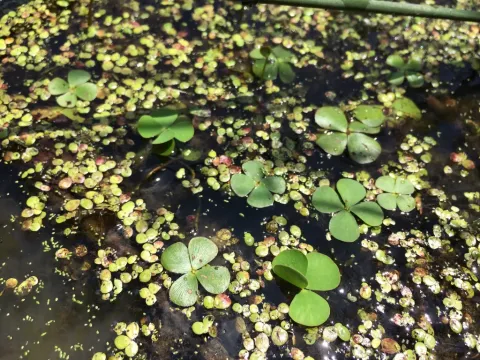
Marsilea is a genus of aquatic ferns belonging to the family Marsileaceae. Commonly known as water clover, these plants are characterized by their distinct four-lobed leaves that resemble a clover, though they are true pteridophytes.
18
items
What the section contains
 Hairy water clover
Marsilea vestita
Hairy water clover
Marsilea vestita
 Hairy water clover
Marsilea hirsuta
Hairy water clover
Marsilea hirsuta
 Marsilea aegyptiaca
Marsilea aegyptiaca
Marsilea aegyptiaca
 Marsilea angustifolia
Marsilea angustifolia
Marsilea angustifolia
 Marsilea auriculata
Marsilea auriculata
Marsilea auriculata
 Marsilea batardae
Marsilea berhautii
Marsilea berhautii
Marsilea coromandeliana
Marsilea coromandeliana
Marsilea batardae
Marsilea batardae
Marsilea berhautii
Marsilea berhautii
Marsilea coromandeliana
Marsilea coromandeliana
 Marsilea crenata
Marsilea crenata
Marsilea crenata
 Marsilea deflexa
Marsilea deflexa
Marsilea deflexa
 Marsilea drummondii
Marsilea drummondii
Marsilea drummondii
 Marsilea gibba
Marsilea gibba
Marsilea gibba
 Marsilea macrocarpa
Marsilea macrocarpa
Marsilea macrocarpa
 Marsilea minuta
Marsilea polycarpa
Marsilea polycarpa
Marsilea minuta
Marsilea minuta
Marsilea polycarpa
Marsilea polycarpa
 Marsilea quadrifolia
Marsilea quadrifolia
Marsilea quadrifolia
 Marsilea strigosa
Marsilea strigosa
Marsilea strigosa
 Nubian Marsilea
Marsilea nubica
Nubian Marsilea
Marsilea nubica
Marketplace
Products in this section · 2

NOMINI 400 K.C., + PAR A-100
F. Kumiay Kemi Kal Industry Co., Ltd., Japan
Herbicides
0
0
No offers
—
Details
Marsilea
The plant originates from various regions worldwide, thriving in both tropical and temperate zones. It is typically found in habitats characterized by seasonal flooding, such as pond margins, marshes, and shallow freshwater environments.
To successfully cultivate Marsilea, one must provide ample light and a consistently wet substrate. The plant is highly adaptable and can grow submerged in water, in semi-aquatic conditions, or on damp terrestrial soil.
Regarding soil requirements, Marsilea thrives in nutrient-rich substrates, particularly those containing silt or fine sand. A steady supply of moisture is essential to prevent tissue desiccation, which can lead to plant decline.
Temperature management is critical for optimal growth, with most species preferring a range between 20°C and 28°C. In nature, the plant utilizes a creeping rhizome system to propagate rapidly and colonize available muddy or aquatic patches.
The primary agricultural and economic use of Marsilea is within the ornamental horticulture sector. It is widely prized for creating aquatic carpets in aquascaping and for stabilizing the soil at the edges of artificial ponds.
Beyond its ornamental value, certain species of Marsilea are harvested for consumption in specific Asian culinary traditions, where they are typically processed through boiling or steaming to improve texture and digestibility.
Harvesting techniques involve the systematic collection of rhizome sections. Because the plant spreads through an extensive root network, thinning or harvesting portions of the mat encourages denser secondary growth in the remaining population.
Post-harvest handling requires maintaining a high-humidity environment. Because these ferns lack a strong protective cuticle against dry air, rapid dehydration is the most common cause of post-harvest damage to the commercial stock.
Efficient management of the harvest involves separating healthy rhizome segments, cleaning them of excess debris, and storing them in hydro-stabilized conditions to ensure survival until the point of sale or re-planting.