
Hairy water clover
Marsilea hirsuta
Description
Growing requirements
Marsilea hirsuta, commonly known as the hairy water clover, is a species of aquatic fern belonging to the Marsileaceae family. Native to Australia, it is found in diverse aquatic habitats ranging from ephemeral pools to the muddy banks of perennial rivers.
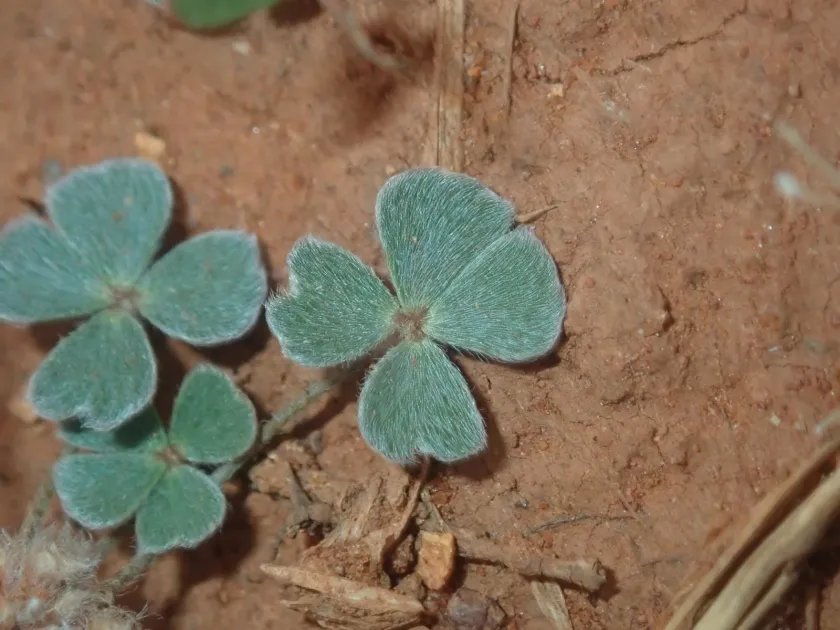
This species is highly sought after by aquascapers for its ability to create a low-growing, dense carpet that mimics terrestrial clover. Depending on the depth and lighting conditions, the plant may exhibit either single-lobed or four-lobed foliage.
For successful cultivation, the plant requires a nutrient-rich substrate, preferably a specialized fine-grained aquasoil. This allows the rhizomes to crawl horizontally and establish a thick layer across the bottom of the tank.
Adequate lighting is essential for maintaining the desired height of the plant. High-intensity lighting, combined with consistent CO2 injection, encourages faster lateral growth and prevents the stems from becoming leggy or overgrown.
Water parameters should remain stable with a temperature between 20°C and 27°C. The plant thrives in soft to moderately hard water, and regular water changes are recommended to maintain clear conditions and optimal nutrient availability.
Main diseases and pests
Algal blooms are the primary threat to Marsilea hirsuta. Nutrient imbalances, particularly an excess of nitrates, can lead to the growth of filamentous algae that entangle the delicate stems and smother the plant.
Root rot, caused by anaerobic pockets in the substrate, can rapidly kill off sections of the carpet. This is typically prevented by proper substrate aeration and avoiding the accumulation of excessive organic waste in the bottom layers.
Destructive fish species can cause significant damage to the plant. Herbivorous or bottom-dwelling fish, such as large cichlids or goldfish, frequently uproot the delicate rhizomes, preventing the colony from establishing properly.
Incompatibility with certain water treatments is a major concern. Many algae-control products and certain chemical medications contain ingredients that are toxic to ferns, resulting in severe tissue damage or necrosis.
To ensure long-term viability, regular monitoring for signs of decay is necessary. If the leaves become translucent or yellow, it is a clear indication that the plant is under stress, likely due to a lack of light or improper nutrient absorption.