
Marsilea macrocarpa
Marsilea macrocarpa
Description
Sowing dates
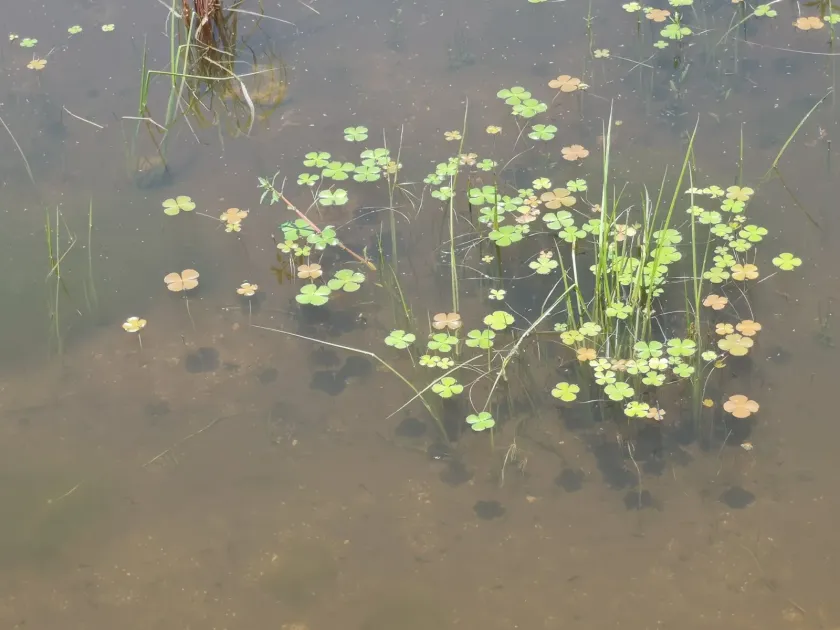
Marsilea macrocarpa belongs to the family Marsileaceae. It is a creeping rhizomatous plant that acts as an aquatic or semi-aquatic perennial fern, often used in aquascaping and shallow water gardening.
Propagation is typically performed by rhizome division. The segments should be separated and planted into a fine-grained, nutrient-rich substrate to ensure rapid establishment.
The optimal planting time is late spring when temperatures stabilize. Placing the rhizome horizontally against the substrate allows nodes to develop roots effectively.
Spacing the plants roughly 5 centimeters apart encourages them to carpet the area quickly, creating a dense, clover-like mat on the bottom of the water body.
Once planted, it is crucial to keep the substrate submerged immediately to prevent the rhizome from desiccating during the sensitive initial growth phase.
Growing requirements
Native to Africa, this species thrives in tropical climates. It requires bright, consistent lighting to maintain its compact growth form and health.
Water temperature should range between 22 and 28 degrees Celsius. While it can withstand temporary dry spells in its natural habitat, it requires stable water levels for continuous cultivation.
The substrate must be well-drained yet rich in organic matter. A mixture of loam and sand is often sufficient for providing the necessary minerals for development.
Water quality is paramount; nitrogen and phosphorus levels should be monitored to prevent excessive algae growth which can suppress the fern's development.
- Requires 8-10 hours of intense light daily.
- Prefers shallow water depth (max 30cm).
- Needs stable pH values between 6.5 and 7.5.
Main diseases and pests
The most common biological threats include infestation by aquatic pests such as pond snails, which may graze on the soft foliage of the plant.
Fungal infections can arise if the water circulation is poor, leading to rhizome rot, which is a common cause of colony collapse in stagnant systems.
Algal blooms pose a severe threat by blocking necessary light and absorbing nutrients that the Marsilea macrocarpa requires for its photosynthetic activity.
Overcrowding within the planting area can lead to poor aeration, creating pockets of anaerobic sediment that promote the growth of harmful bacteria.
Integrated pest management, including physical removal of snails and regular water filtration, is recommended to keep the plant population healthy and vibrant.