
Marsilea aegyptiaca
Marsilea aegyptiaca
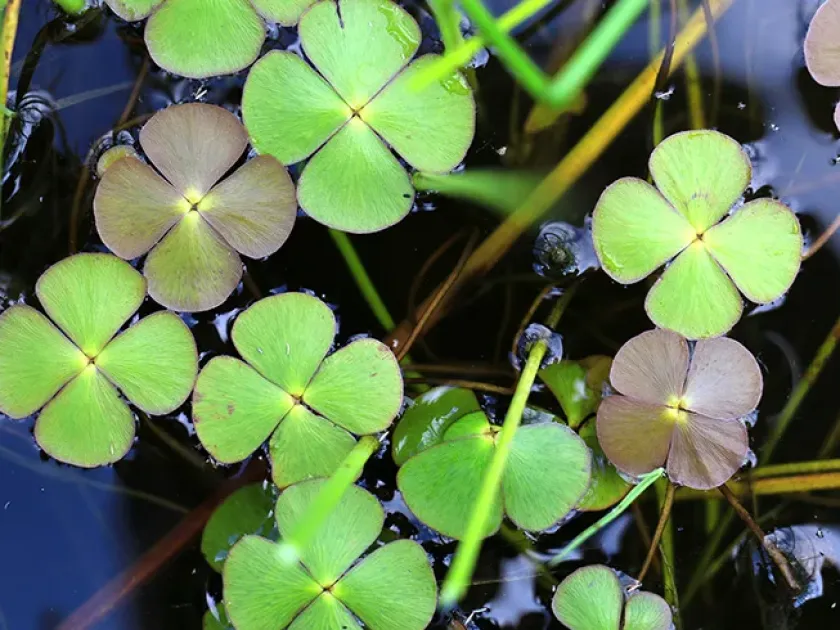
Description
Growing requirements
Marsilea aegyptiaca is a unique aquatic plant species belonging to the Marsileaceae family. Often referred to as a water clover, it is technically a heterosporous fern that thrives in aquatic and semi-aquatic habitats in arid regions.
The origin of this species is linked to the wetlands and seasonal water bodies of Egypt and surrounding North African countries, where it has evolved to survive both submerged and amphibious phases.
For successful cultivation, Marsilea aegyptiaca requires high-intensity light levels. It grows as a rhizomatous plant, spreading across the substrate and forming dense mats of four-lobed, clover-like leaves.
Soil requirements involve nutrient-rich, fine-grained substrates such as silt or loamy sand. The medium must retain moisture consistently while allowing the creeping rhizomes to penetrate and anchor effectively.
Optimal environmental conditions include high ambient temperatures and adequate water depth. While it tolerates periodic drying, it grows most vigorously when partially submerged in shallow, warm water.
Main diseases and pests
Key threats include fungal pathogens that exploit weak plant tissue in environments with poor water circulation or stagnant conditions, potentially leading to widespread rhizome rot.
Herbivory by aquatic snails and certain insect larvae can significantly reduce plant vigor, as they often consume the tender leaf blades, hindering photosynthesis and vegetative spread.
Competitive stress from aggressive aquatic weeds often restricts the growth of this fern, necessitating regular maintenance to keep its immediate surroundings clear of faster-growing flora.
Chemical imbalances in the water column, such as excessive nitrates or sudden changes in pH, can inhibit the production of sporocarps and limit the overall resilience of the culture.
Extreme environmental fluctuations beyond the plant's natural adaptation range, particularly sudden cold snaps, may induce dormancy or total failure of the colony in non-native climates.