
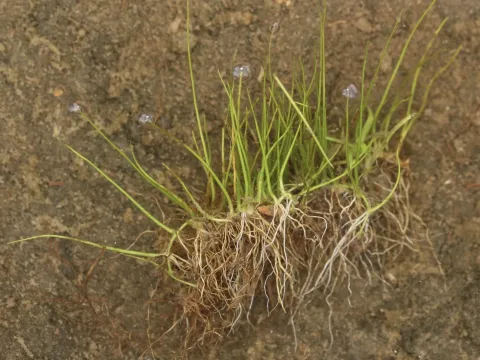
Pillwort
Pilularia
Pillwort (Pilularia) is a unique genus of aquatic or semi-aquatic ferns belonging to the family Marsileaceae. Unlike typical ferns with broad fronds, this plant has thin, filiform leaves that make it look more like a grass or a rush, allowing it to thrive in wet habitats.
What the section contains


Pillwort
The plant originates from diverse wetland regions across Europe, Asia, and Australia. It is naturally adapted to periodically inundated areas, shallow pond margins, and mudflats, where it can survive in both submerged and emergent conditions depending on the water level.
Botanically, the plant is characterized by a creeping rhizome that helps it spread horizontally along the substrate. It reproduces through spores housed in small, spherical structures called sporocarps, which typically grow at the base of the leaf stalks, resembling small pills.
The cultivation of this plant requires specific environmental conditions, primarily high soil moisture and abundant sunlight. It prefers muddy, nutrient-rich substrates and performs best in stable aquatic environments where the soil does not dry out completely during the growing season.
In modern practice, pillwort is primarily utilized in ornamental horticulture and pond management. It is often employed in water gardens for its clean, linear aesthetic, and in environmental restoration projects to help stabilize shorelines and maintain healthy aquatic ecosystems.
Threats to pillwort cultivation primarily involve competition from invasive filamentous algae and rapid changes in water levels that may expose the plants to drought stress. Poor water quality, particularly high levels of pollutants or extreme nutrient imbalances, can also lead to localized necrosis of the rhizome system.