
Marsilea drummondii
Marsilea drummondii
Description
Growing requirements
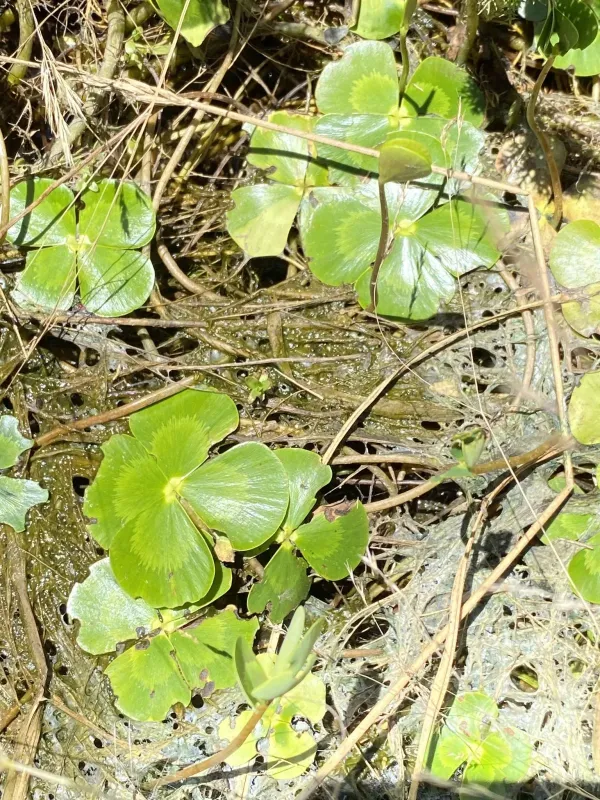
Marsilea drummondii, commonly known as nardoo, belongs to the Marsileaceae family. It is a distinctive aquatic fern often referred to as water clover due to its four-lobed leaves.
The native distribution of this species is largely centered in Australia, where it naturally inhabits floodplains, wetlands, and the margins of ephemeral water bodies.
This culture is an amphibious plant, meaning it can survive both fully submerged in aquatic environments and in terrestrial conditions where the soil remains consistently moist.
Optimal growth requires high light intensity, which prevents the leaf stalks from becoming excessively elongated and helps maintain a dense, compact growth habit.
Regarding soil requirements, the plant thrives in silt-rich or loamy substrates that are high in organic matter and maintain a stable, near-neutral pH level.
Main diseases and pests
Common health issues in Marsilea drummondii plantations often stem from poor water quality, specifically the accumulation of nitrates or phosphates that encourage pathogenic fungal growth.
Invertebrate pests, particularly freshwater snails and certain crustacean species, pose a threat by grazing on the soft leaf tissue and damaging the plant's structural integrity.
High plant density coupled with inadequate water circulation can lead to oxygen depletion around the roots, resulting in rhizome rot and significant loss of biomass.
Extreme temperature fluctuations are significant stressors that can hinder physiological development and increase susceptibility to opportunistic secondary infections.
Disease management strategies rely on maintaining hygiene within the aquatic system, ensuring proper water flow, and removing debris to prevent the buildup of harmful pathogens.
Harvesting
The primary horticultural application of Marsilea drummondii is in landscaping and aquascaping, where it is valued for creating lush, carpet-like ground cover in aquatic settings.
Historically, the sporocarps of this plant have served as a food source, containing significant amounts of starch that can be processed into flour by traditional methods.
Commercial propagation is primarily achieved through the division of creeping rhizomes, allowing for rapid expansion of the cultivation area during the growing season.
Effective water management is crucial in large-scale production, as the plant depends on consistent moisture levels to sustain its active metabolic processes and vegetative growth.
Harvesting operations involve the careful extraction of rhizome segments, ensuring that the root system remains intact for regrowth and continued production cycles.