
Marsilea angustifolia
Marsilea angustifolia
Description
Growing requirements
Marsilea angustifolia is an aquatic fern belonging to the family Marsileaceae. Native to Australia, this plant is well-adapted to environments that experience periodic flooding and fluctuations in water levels, making it a robust species for specific aquatic setups.
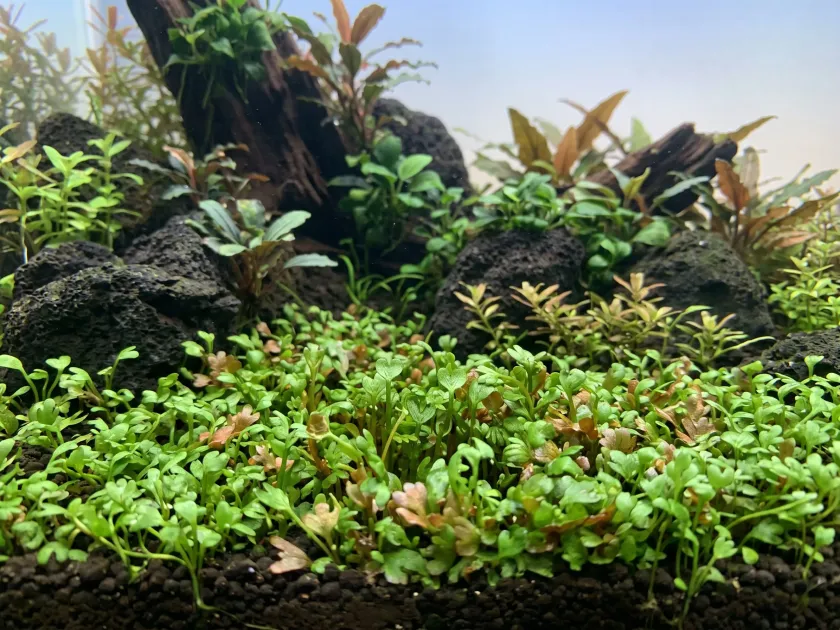
The plant features a creeping rhizome that spreads across the substrate, producing distinct clover-like leaves. These leaves can exhibit significant morphological variation depending on whether the plant is submerged or growing in a terrestrial state.
Successful cultivation requires high light intensity. Without sufficient light, the plant tends to grow vertically, sacrificing its natural compact, carpet-like appearance for taller, less aesthetically pleasing stems that are prone to breakage.
The plant thrives in nutrient-rich substrates. It is highly responsive to the addition of CO2 and regular micronutrient fertilization, which are essential for maintaining vibrant color and strong root development throughout the growing season.
The ideal temperature for Marsilea angustifolia ranges between 22°C and 27°C. Consistent thermal conditions are vital to ensure continuous growth, as thermal stress can lead to metabolic slowdowns and increased vulnerability to plant diseases.
Main diseases and pests
The biggest threat to this crop is the overgrowth of nuisance algae. Since the plant occupies the foreground and grows relatively slowly compared to opportunistic algae, competition for light and nutrients can be severe.
Root rot caused by poor substrate circulation is another significant risk. If the soil becomes anaerobic or heavily compacted, the rhizomes will begin to decay, leading to the rapid collapse of the entire carpet.
Invertebrate pests can cause mechanical damage, leaving the leaves susceptible to secondary infections. Regular monitoring is necessary to keep pest populations at a level that does not impact the plant's health or market value.
To maintain plant health, it is recommended to avoid heavy chemical usage. Biological control methods, such as introducing small fish or snails that eat algae but leave the fern alone, are often preferred by professional growers.
Proper sanitation of equipment is required when working with multiple tanks or pools. This prevents the spread of pathogens that could wipe out a crop, ensuring that the propagation system remains sterile and productive.
Harvesting
The primary use of Marsilea angustifolia is in the aquarium industry and ornamental pond landscaping. It is highly valued for creating realistic green foregrounds, providing a natural look that mimics terrestrial lawns in a water environment.
Harvesting for commercial distribution is performed through the division of mature mats. Because the plant spreads via rhizomes, farm managers can easily separate individual segments that possess active growth tips to start new crops.
During the post-harvest process, it is essential to keep the roots moist. The plant is usually bundled into small, breathable containers or mesh packs to ensure it remains healthy during transport to retail locations or end-users.
Water quality management during the production phase is critical. Producers often utilize automated systems to monitor pH and nutrient levels, ensuring that the harvest meets the high quality standards expected by professional aquascapers.
Product longevity is highly dependent on how the plant is handled after harvest. Providing proper light and nutrient levels immediately after replanting in new substrates will ensure a rapid recovery and consistent growth for the buyer.