
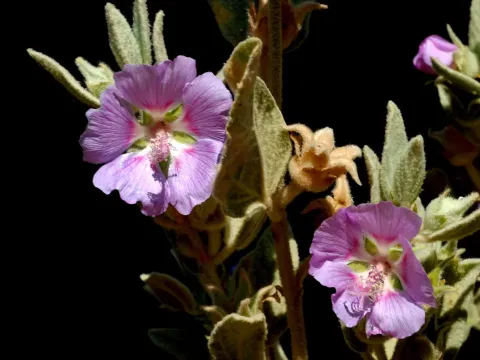
Oblong-leaved mallow
Malva oblongifolia
Oblong-leaved mallow (Malva oblongifolia) is a herbaceous plant belonging to the Malvaceae family. It is recognized for its adaptive nature and its ability to thrive in various soil types within its native distribution range.
What the section contains
Oblong-leaved mallow
The crop prefers well-drained, fertile soil with a neutral pH level to ensure proper nutrient uptake. It is essentially a sun-loving plant that requires clearings or open fields to achieve maximum biomass production during the growth season.
Regarding climate, the plant exhibits good resistance to moderate heat and intermittent dry spells. It is highly valued in regions where precipitation patterns are erratic, as it maintains growth through efficient moisture regulation.
Agronomic practices focus on maintaining optimal soil structure through regular mechanical cultivation. Careful spacing during planting is essential to ensure that each plant has enough room to develop its foliage and root system without intense competition.
The agricultural usage of this crop includes its potential as a forage resource and as a source of raw materials for industrial or medical applications. Its versatility makes it a subject of interest for sustainable agricultural development.
The plant is susceptible to fungal diseases such as rust and leaf spot, which are common in environments with high humidity. Proper crop rotation is the primary strategy to prevent soil-borne pathogens from building up over several seasons.
Common pests include aphids and various beetle species that feed on the soft tissues of the leaves. Integrated pest management strategies, including the use of trap crops, help keep these pest populations below the economic injury level.