
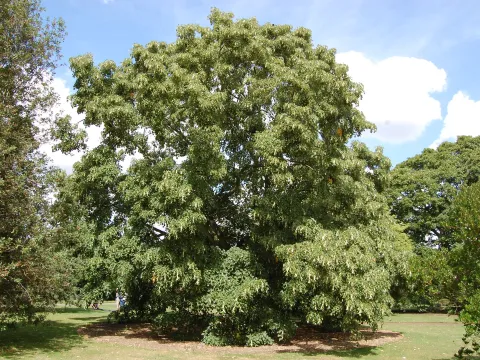
Oliver's Lime
Tilia oliveri
Oliver's Lime (Tilia oliveri) is a deciduous tree belonging to the Malvaceae family. Native to the mountainous regions of central and western China, this species is highly valued by horticulturists for its striking foliage, which features a distinct silvery-white undersurface.
What the section contains
Oliver's Lime
This tree thrives in deep, well-drained, and nutrient-rich soil. It performs best in neutral to slightly acidic conditions. Gardeners should avoid planting it in waterlogged areas, as the root system requires adequate aeration to prevent rot and ensure robust development throughout the growing season.
The species prefers positions in full sun or light shade. While it exhibits good tolerance for various climates once established, young specimens benefit significantly from being shielded against harsh, drying winds that can cause early leaf desiccation and structural damage.
Adequate spacing is crucial when planting to allow for the tree's natural spread and to ensure good air circulation within the canopy. Regular, deep watering during extended periods of drought is recommended to maintain the tree's overall health and the vibrancy of its silvery leaf undersides.
As a productive honey-producing plant, Oliver's Lime contributes to local biodiversity, attracting diverse pollinators to the garden. Its elegant, rounded growth habit makes it an excellent choice for specimen planting or as a focal point in larger landscape designs.
Common threats to Tilia oliveri include aphids and mites, which can infest the foliage, particularly during warmer, drier months. Integrated pest management, including the use of horticultural oils or systemic insecticides, is often necessary to prevent severe defoliation.
Fungal leaf spot diseases may appear if the environmental humidity remains consistently high or if the canopy becomes too dense. Proper pruning practices are essential to remove deadwood and facilitate sunlight penetration and airflow to the inner branches.
Environmental stress, such as air pollution and soil compaction, can weaken the tree, making it more susceptible to opportunistic infections. Monitoring for signs of nutrient deficiency, like interveinal chlorosis, is key to proactive tree maintenance.
Winter injury to the bark, particularly in younger trees, can be a concern in cooler climates. Protective measures such as trunk wrapping or mulching around the base can help mitigate temperature fluctuations and prevent frost-related cracking of the outer layer.
Effective management strategies should always emphasize cultural practices, such as proper fertilization and seasonal maintenance, to bolster the tree's innate resistance. Healthy trees are significantly more adept at overcoming minor pest or pathogen pressure without the need for excessive intervention.