
Pachira
Pachira
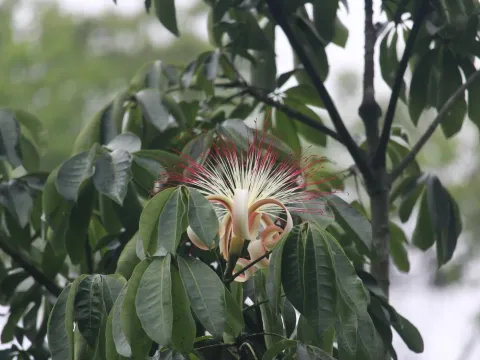
Pachira (Pachira) is a genus of tropical trees belonging to the Malvaceae family. Originating from the swampy regions of Central and South America, these plants have evolved to thrive in high-humidity environments with stable temperatures.
What the section contains


Pachira
The plant is distinguished by its unique swollen trunk, which acts as a storage organ for water. This physiological adaptation allows the tree to withstand dry periods, a common occurrence in its native tropical habitat. Its leaves are palmately compound, providing a lush appearance.
For successful cultivation, Pachira requires bright, indirect sunlight. Exposure to harsh direct sun can cause significant foliage damage. Maintaining a steady room temperature between 20°C and 25°C is critical, as the plant is sensitive to thermal stress and cold drafts.
Soil requirements involve using a well-draining, nutrient-rich substrate. A mix of peat, bark, and perlite is generally recommended to ensure proper aeration. Water should be applied only when the top layer of the soil has dried out to prevent the risk of waterlogging.
Beyond its ornamental use, the plant has economic significance. In its native range, the seeds are harvested and consumed, often described as having a flavor similar to peanuts when roasted. The wood is also utilized in local carpentry and craft sectors.
Pachira is susceptible to common houseplant pests, primarily spider mites and scale insects. These pests thrive in low-humidity conditions, often congregating on the undersides of leaves, which can lead to stunted growth and leaf drop if not addressed immediately.
Root rot is the most common pathology, almost exclusively caused by overwatering or poor drainage. Excess moisture in the root zone leads to oxygen deprivation and fungal infections, which often result in the rapid decline of the entire plant structure.