
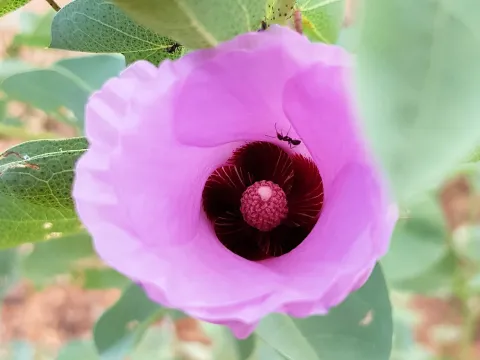
Nelson's cotton
Gossypium nelsonii
Nelson's cotton (Gossypium nelsonii) is a perennial shrub belonging to the Malvaceae family. It is a wild species native to the arid interior regions of Western Australia and the Northern Territory, where it thrives in extreme environmental conditions.
What the section contains
Nelson's cotton
The plant is specifically adapted to rocky, well-drained soils and is capable of surviving in areas with very limited annual rainfall. It is considered a xerophyte, meaning it has evolved structural mechanisms to endure prolonged drought.
Botanically, Gossypium nelsonii is characterized by its dense covering of hairs on the stems and leaves, which helps to reduce water loss through transpiration. The flowers typically display a yellow coloration with a distinct purple center, common in many desert-dwelling malvaceous species.
Unlike commercial cotton cultivars, this species produces a very short and coarse fiber, making it unsuitable for traditional textile production. However, it remains a focal point for agricultural scientists studying the genetic traits of stress resistance and drought tolerance.
In terms of cultivation, this species is not grown in large-scale agriculture but is occasionally found in botanical research settings. Its primary value lies in its germplasm, which holds potential for breeding more resilient future cotton varieties capable of withstanding harsher climates.