
Neesia
Neesia
The genus Neesia belongs to the Malvaceae family, comprising large tropical trees native to the dense rainforests of Southeast Asia. These plants are essentially wild species that require a specific stable microclimate for their growth and survival.
What the section contains


Neesia
The trees thrive in environments characterized by high humidity, abundant annual rainfall, and consistently warm temperatures. They are typically found in deep, fertile soils rich in organic material within lowland and hill dipterocarp forests.
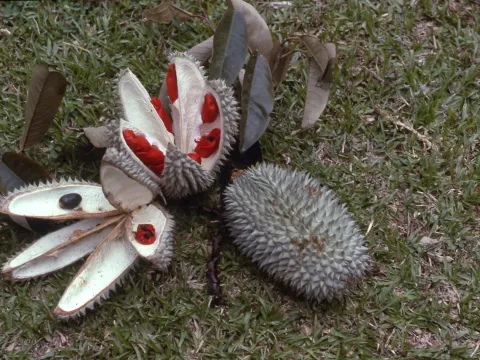
Botanically, Neesia is distinguished by its large, woody capsules that possess sharp, spine-like structures. These fruits are designed to protect the developing seeds from predation, reflecting the competitive nature of the tropical forest floor and canopy layers.
While not a traditional agricultural crop, Neesia possesses significant forestry value due to its robust wood properties. The species relies on complex ecological interactions for pollination and seed dispersal, which makes cultivation outside its native range highly challenging.
Successful management of these trees involves maintaining the integrity of their forest habitats. Because they are slow-growing and ecologically sensitive, they are not suited for standard plantation models, requiring instead careful conservation and forestry management practices.
The primary threat to the genus Neesia is deforestation driven by the expansion of large-scale industrial plantations. The removal of canopy trees directly leads to the loss of suitable habitats for these slow-growing species, significantly reducing their population density.
Pathogenic fungi present a constant risk to trees in humid environments, particularly when the forest canopy is disturbed and drainage patterns are altered. These infections can target roots and stems, weakening the structural integrity of the individual trees.
Various insect herbivores specialized in tropical flora can cause severe defoliation, which hampers the tree's ability to compete for sunlight. In fragmented forest patches, these outbreaks can become more concentrated and devastating for the remaining specimens.
Environmental stressors such as prolonged drought periods, increasingly common in the region, render the trees susceptible to pests and disease. The loss of associated forest species also reduces the natural control mechanisms that keep pest populations in check.
Conservation efforts prioritize the protection of existing Neesia populations from illegal logging and land clearing. Understanding the complex biology of this genus is essential for developing restoration strategies that support the biodiversity of the Southeast Asian rainforests.