
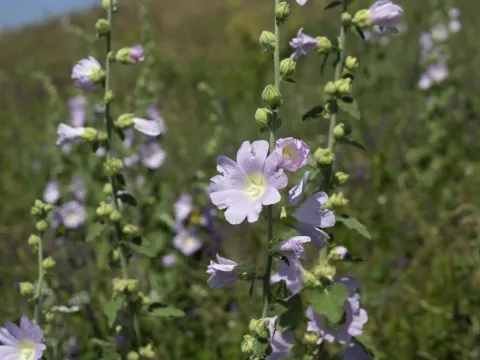
Pale hollyhock
Alcea pallida
Sowing of Alcea pallida is typically performed in late spring once the soil temperature has reached a level suitable for consistent germination.
What the section contains
Pale hollyhock
Seeds are placed at a depth of approximately 2-3 centimeters into well-prepared soil to ensure stable moisture contact and prevent desiccation.
For earlier establishment, seeds can be sown in containers during early spring, allowing seedlings to be transplanted after the risk of frost passes.
Proper spatial management is crucial; spacing plants about 50-60 centimeters apart allows for adequate airflow and prevents crowding in the rows.
Germination usually takes 10 to 14 days under optimal temperature conditions, followed by rapid initial growth of the basal leaf rosette.
As a member of the Malvaceae family, the pale hollyhock is naturally adapted to sunny, open habitats with well-drained, nutrient-rich soils.
This species shows remarkable tolerance to heat and drought, making it an excellent candidate for regions with variable precipitation patterns.
It thrives in soils that are slightly alkaline, though it can tolerate a variety of soil types provided that drainage is effectively managed.
It is important to avoid locations with high water tables or heavy, clay-based soils that may lead to root rot during the dormant season.
The plant demonstrates significant biological resilience, often thriving in neglected areas where other more sensitive crops would struggle to survive.
The most significant pathological threat to this culture is hollyhock rust, which appears as pustules on the undersides of the leaves.
Powdery mildew may also occur during periods of high humidity and poor circulation, appearing as a characteristic white fungal coating on leaves.
Pest pressure is primarily driven by aphids, which aggregate on the flowering spikes and can weaken the plant by feeding on phloem sap.
Spider mites can also be problematic during intense summer heat, causing stippling on the leaves and eventually leading to premature senescence.
Implementing a strict sanitation program, including the removal of infected plant debris, is vital for managing these recurring threats effectively.