
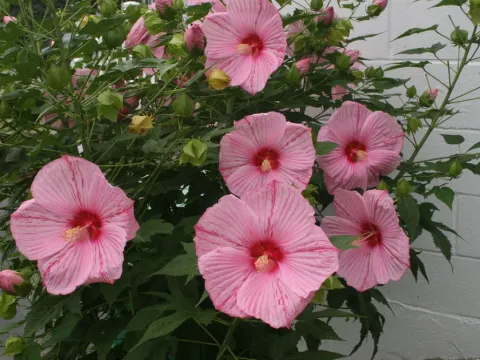
Hardy hibiscus
Hibiscus hybrids
Hardy hibiscus (Hibiscus hybrids) is a herbaceous perennial belonging to the Malvaceae family. It is prized by gardeners for its spectacular, dinner-plate-sized flowers that emerge throughout the mid-to-late summer season on robust, annual stalks.
What the section contains
Hardy hibiscus
These hybrids require a site with full sun exposure to thrive and produce the best bloom count. While they can tolerate partial shade, insufficient light often results in leggy growth and diminished flowering potential.
The ideal soil for this crop is rich, slightly acidic, and consistently moist, yet well-draining. Although they love moisture, they do not thrive in standing water, which can quickly lead to root rot issues.
Climate conditions are crucial, as hardy hibiscus requires a long, warm growing season to reach full maturity. In colder regions, providing a thick layer of organic mulch in late autumn is essential to protect the root zone during winter dormancy.
Regular fertilization is part of the standard agrotechnical regimen for this plant. Using a balanced fertilizer with higher phosphorus levels during the bud-development stage significantly improves both the color vibrancy and the size of the blooms.
Common pests that may affect the plant include aphids, spider mites, and whiteflies. These insects typically target the undersides of leaves and developing flower buds, causing yellowing and deformation if left unchecked.
Fungal diseases are another threat, particularly in humid or crowded conditions. Powdery mildew is the most frequent ailment, appearing as a white, dusty growth on the foliage that interferes with photosynthesis.
Management strategies involve practicing good garden hygiene, such as removing debris and dead foliage at the end of the season. This significantly reduces the overwintering capacity of both pests and fungal pathogens.
Chemical control options include applying systemic insecticides or horticultural oils for pest outbreaks, while fungicides are reserved for controlling severe cases of mildew or rust infections.
Optimizing plant spacing allows for proper air circulation, which is the most effective natural defense against most foliage diseases. Keeping the plants healthy with consistent water and nutrient management helps them withstand minor pest pressures naturally.