
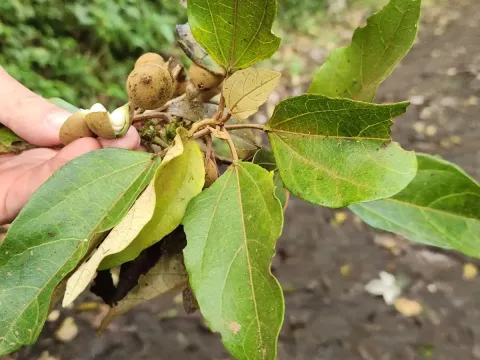
Hampea
Hampea
Hampea is a genus of evergreen trees or large shrubs belonging to the Malvaceae family. Unlike many of its relatives, this crop is primarily native to the tropical and subtropical forests of Central and South America.
What the section contains


Hampea
The plant prefers humid forest conditions where the average annual temperature remains high and rainfall is sufficient to support active growth throughout the year. In its natural habitat, Hampea is often found in the understory or at forest edges, showing high tolerance to shading during early development.
For optimal growth, the tree requires well-drained soils with high organic matter content. Waterlogging in the root system can lead to rot, so site selection for cultivation must account for natural topography and drainage.
Maintaining a certain level of air humidity is a crucial factor in successful management. In regions with a pronounced dry season, Hampea requires supplemental irrigation to prevent premature leaf shedding and metabolic slowdown.
Botanically, the genus is characterized by palmate or entire leaves and typical Malvaceae flowers with numerous stamens. The fruits are capsules that split upon maturity, releasing seeds often covered with a brightly colored aril to attract bird dispersers.
The economic use of Hampea spans forestry and traditional crafts. Fibers from the bark of certain species have been used by local populations for weaving baskets, ropes, and creating durable textiles, owing to the high strength of the plant fibers.
Hampea wood possesses moderate density, making it suitable for small carpentry projects, tool handles, and other household items requiring flexibility and lightness. However, the industrial significance of the timber is limited by the slow growth rate of the plant compared to faster-growing species.
Due to its ability to attract pollinators, Hampea plays a vital role in restoring biodiversity on degraded lands. In agroforestry systems, it serves as a component that creates a protective canopy for shade-tolerant crops like coffee or cacao.
In terms of breeding, the potential of the crop remains largely under-researched. Primary attention is focused on preserving natural populations, which serve as a source of genetic material for potential programs targeting the development of fiber-producing woody crops.
General biomass yield depends on planting density and management quality during the first years. Under optimal conditions, the trees can form significant volumes of wood and fibrous bark, allowing them to be considered a promising resource for sustainable local land use.
The main threats to Hampea are specific tropical pests, such as leaf-eating insects and weevils, which can damage young bark and buds. Regular monitoring of tree health allows for the early detection and management of infestation outbreaks.
Among diseases, fungal infections affecting the leaf blades are common when humidity is excessive and canopy aeration is poor. Powdery mildew can occur during periods of anomalous climatic fluctuations that weaken the plant's natural immune system.
Root rot poses a serious danger when agricultural best practices are ignored, particularly with overwatering in heavy clay soils. Prevention includes the use of drainage materials and maintaining appropriate soil pH levels.
Competition with aggressive weeds during the first years of life is critical. Rapidly growing vines can smother young saplings, preventing access to sunlight and nutrients, which necessitates regular manual weeding and clearing.
Anthropogenic factors remain the primary threat to wild species of the genus. Deforestation and climate change are shrinking the natural distribution range, making controlled cultivation an essential tool for preserving the genetic diversity of the genus.