
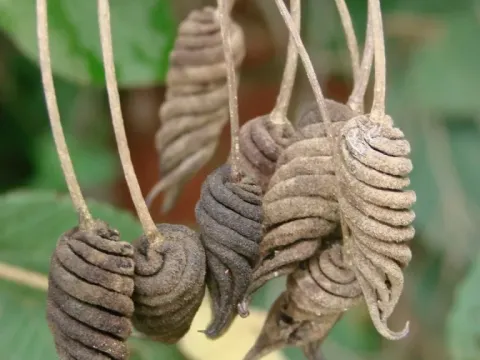
Helicteres
Helicteres
Helicteres seeds are sown in well-warmed soil, as the crop is highly sensitive to cold temperatures during germination. The optimal time for sowing is at the beginning of the rainy season, when the soil moisture levels allow seeds to break dormancy efficiently.
What the section contains


Helicteres
Pre-sowing treatment, including scarification of the hard seed coat, significantly increases germination rates. Planting is usually done in rows, maintaining sufficient spacing between plants to support the development of a robust root system and aerial parts.
In commercial cultivation, thorough seedbed preparation is essential. The soil must be loose and free from weeds, which can severely stunt the growth of young Helicteres seedlings during their early developmental stages.
The planting depth typically ranges from 2 to 3 centimeters. This provides an ideal balance between oxygen access and moisture retention, both of which are critical for the successful growth of the plant embryo.
After uniform emergence, thinning is performed to retain only the most vigorous plants. This practice is crucial to prevent competition for light and essential nutrients between adjacent plants in the field.
Helicteres belongs to the Malvaceae family and consists of shrubs or woody plants of tropical origin. Native to regions in Southeast Asia, India, and northern Australia, its growth requirements are dictated by its tropical heritage.
The plant requires high temperatures throughout its development, with an optimal range of 25–32 degrees Celsius. It cannot tolerate frost, which limits its commercial cultivation to tropical and subtropical climatic zones.
Successful growth requires fertile, well-drained soil with a neutral to slightly acidic pH. Helicteres reacts poorly to waterlogging in the root zone, which can trigger rot and cause rapid plant decline.
The crop is light-demanding and requires full sun exposure throughout the day. In shaded conditions, shoot development slows down, and the overall quality of both fiber and seed yields decreases significantly.
During the active vegetative growth phase, regular watering is necessary, especially during budding and flowering. However, as the pods mature, irrigation frequency should be gradually reduced to ensure proper pod development.
The economic use of Helicteres is primarily focused on obtaining strong bast fiber from the stems. Green mass yields depend heavily on plant density and the level of agronomic care provided to the plantation.
Beyond fiber, the plant's pods are a valuable product often utilized in the pharmaceutical industry. The yield of pods is determined by the plant's maturity and pollination success, often driven by local insect populations.
Harvesting pods is done selectively as they turn brown, as they naturally dehisce upon reaching full maturity. Timely harvesting minimizes seed loss and preserves the biological value of the material.
Average productivity indicators vary significantly across the more than 60 species within the genus. Selecting the right variety is a key factor in achieving high economic and agricultural targets.
To improve yields, the application of organic fertilizers at the start of the season is recommended. Balanced nutrition promotes the formation of stronger stems and stimulates more abundant production of reproductive organs.
Helicteres is susceptible to specific tropical pests, such as various lepidopteran caterpillars that defoliate leaves and damage young shoots. Regular field inspections are vital for the early detection of infestations.
Fungal infections, which manifest as leaf spots or anthracnose, occur under high humidity and poor air circulation. Prevention relies on maintaining proper plant spacing to ensure good ventilation throughout the canopy.
Aphids and whiteflies can also cause damage by feeding on sap from young tissues. Utilizing biological pest control methods helps maintain insect populations below economic thresholds without harming the environment.
Root rot is one of the most severe threats if irrigation protocols are not followed. Affected plants must be promptly removed from the field to prevent the spread of the infection to healthy individuals.
Weeds pose a serious threat to early development. Since Helicteres grows slowly during its first few weeks, rigorous weed management between rows is necessary to prevent competition for resources.
Fiber harvesting is carried out at the onset of flowering, when the stems contain the highest concentration of high-quality fibers. Mowing is performed mechanically or manually, followed by a retting process for fiber extraction.
Harvesting pods for medical use is done exclusively by hand. The pods feature a distinct spiral shape, resembling a corkscrew, which makes mechanical harvesting difficult and maintains the reliance on manual labor.
After harvesting, pods require drying in the shade to preserve their biologically active compounds. Direct sunlight can degrade the chemical composition of the raw materials, so proper drying area management is essential.
Seed cleaning from the pods is performed using specialized machinery after the drying process is complete. The quality of the finished seed lot is checked for germination and impurities before being placed in storage.
Storage of the collected raw materials must occur in dry, ventilated areas with low humidity. This prevents fungal spoilage and extends the shelf life of the medicinal components stored within the pods.