
Henry's Lime
Tilia henryana
Description
Growing requirements
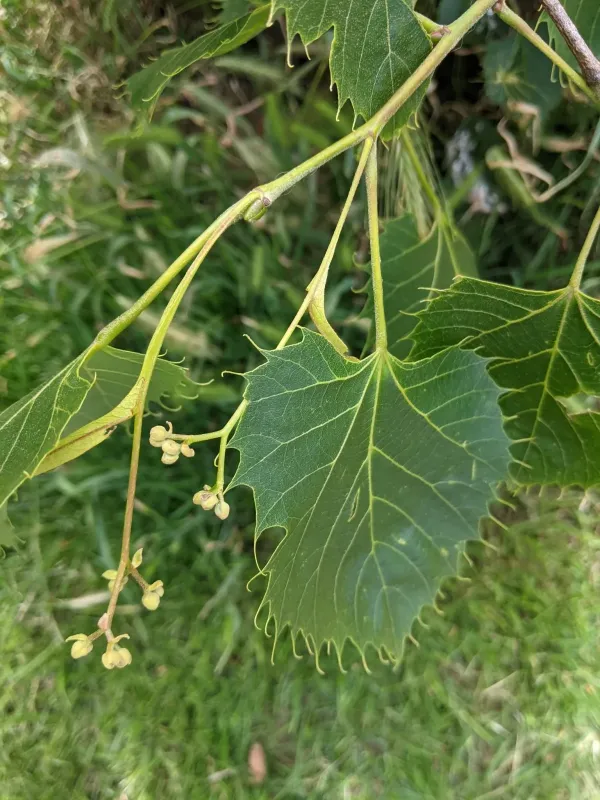
Henry's Lime (Tilia henryana) is a rare and highly ornamental tree species belonging to the Malvaceae family, native to central and western China. It is celebrated by arborists and gardeners for its distinct, large, heart-shaped leaves with prominent bristles on the margins.
The tree thrives in fertile, deep, and well-drained soils. It exhibits a preference for slightly acidic to neutral substrates rich in organic matter. Proper soil structure is essential, as the species does not tolerate waterlogged conditions which can lead to root degradation.
Regarding climate, Henry's Lime requires a sheltered position protected from strong, drying winds. While it is hardy in temperate zones, young trees benefit from protection against harsh winter frost and late spring cold snaps that may damage emerging buds.
For optimal growth, provide a site with dappled sunlight or partial shade. In intense sunlight regions, the foliage can scorch; therefore, consistent soil moisture and humidity are vital during the active growth season to ensure the tree maintains its vibrant appearance.
In terms of management, minimal pruning is required to maintain its natural, graceful structure. Fertilizer application should be focused on the early spring period to promote healthy foliage development and overall plant vigor throughout the summer.
Main diseases and pests
The primary pests affecting Henry's Lime include aphids and leaf-eating beetles, which can cause significant damage to the canopy if not managed. Integrated pest management, including natural predators, is recommended to keep these populations under control.
Fungal diseases, specifically leaf spot and powdery mildew, may emerge in environments with poor air circulation or excessive canopy density. Thinning the canopy and ensuring proper spacing between trees are effective preventative measures against these pathogens.
Root system vulnerability is a major concern, particularly when planting in compacted or heavy clay soils. Soil aeration and the use of organic mulch around the base help improve oxygen exchange and protect the roots from environmental stress.
Environmental pollution, particularly in urban settings, can weaken the immune response of the tree, making it more susceptible to opportunistic infections. Planting in protected garden or park settings away from main traffic routes is preferred.
Wildlife damage, such as deer browsing on young shoots or small mammals gnawing on bark, can be mitigated by installing physical guards during the initial years of establishment. These simple protective steps are crucial for the longevity of the specimen.