
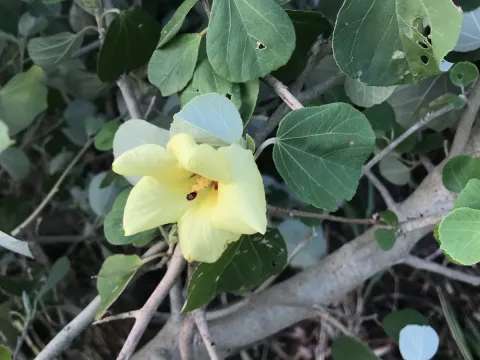
Hibiscus hamabo
Hibiscus hamabo
Hibiscus hamabo is a perennial woody shrub belonging to the Malvaceae family. Native to the coastal regions of East Asia, it is well-adapted to maritime environments, including sandy dunes and areas exposed to salt spray, which distinguishes it from many other ornamental species.
What the section contains
Hibiscus hamabo
The plant thrives in full sun and requires well-drained soil to maintain its health. It exhibits a remarkable tolerance for saline conditions, making it an excellent choice for coastal landscaping where soil quality might be poor or challenging for other species.
Cultivation practices focus on providing a warm environment, as the plant is not frost-hardy. In temperate regions, it is often kept in containers to allow for relocation during cold weather, as freezing temperatures can severely damage its growth and vitality.
Water requirements are moderate. While the shrub needs consistent moisture during the growing season, it is highly sensitive to waterlogging. Good drainage is essential to prevent physiological stress and root complications that may arise from stagnant water.
Botanically, Hibiscus hamabo is recognized for its thick, leathery, rounded leaves and vibrant yellow flowers with a deep crimson eye. The flowers usually bloom during the summer months, providing a stunning display of color in the landscape.
The primary pests affecting Hibiscus hamabo include aphids and spider mites, which can proliferate during dry and warm spells. Regular inspection of the foliage is necessary to control these infestations before they weaken the plant structure.
Common fungal issues often relate to moisture management. Root rot is a significant threat in poorly drained soils, while powdery mildew can affect the leaves if the plant is situated in an area with high humidity and poor air circulation.
Management of pest populations often involves the use of horticultural soaps or systemic insecticides depending on the severity of the outbreak. Preventive care includes maintaining optimal spacing between plants to encourage better airflow.
Disease control is largely preventative, focusing on proper irrigation schedules and sanitation. Removing dead or diseased branches helps improve the overall health of the shrub and prevents the spread of infection to healthier tissues.
In terms of agricultural and landscape use, Hibiscus hamabo is highly valued for its ecological contribution to coastal stability. Its deep root system helps in soil erosion control, while its aesthetic appeal makes it a focal point in public parks and private seaside gardens.