
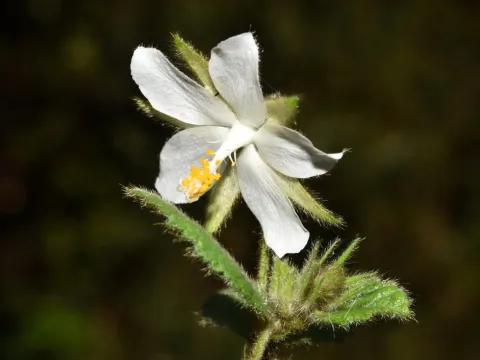
Hibiscus fuscus
Hibiscus fuscus
Hibiscus fuscus is a perennial semi-shrub belonging to the Malvaceae family, recognized for its potential as a source of high-quality fiber. Cultivating this crop effectively requires a thorough understanding of its growth cycles and biological requirements within the specific climate of its cultivation area.
What the section contains
Hibiscus fuscus
The sowing process begins once soil temperatures consistently stay above +18°C to +20°C. Planting too early, when soil is cold, can lead to uneven germination and significant losses in plant density during the critical early growth stages.
Seeds are typically sown in rows, with spacing optimized to ensure that each plant has sufficient access to light and nutrients. Standard planting depth is maintained at 2–3 cm, depending on the soil moisture content and physical structure of the field.
High-energy seeds are essential for uniform sprout emergence. It is recommended to use specialized precision planters to ensure consistent seed placement, which facilitates uniform development across the entire field area.
Preparing the soil beforehand, including proper tilling and fertilization, creates a favorable environment for the root system, which helps young Hibiscus fuscus plants establish themselves rapidly and compete effectively against early weeds.
This species is highly thermophilic, meaning it thrives in regions with long, hot summers. Sustained temperatures in the range of +25°C to +30°C are crucial for achieving maximum biomass accumulation during the primary vegetative period.
Soil quality plays a vital role in the yield. Fertile, well-draining loamy soils provide the best results, as waterlogged conditions often lead to root rot and poor structural fiber development in the main stems.
Water management is particularly important. While the plant requires consistent moisture during its rapid growth phase, excessive water during the maturation stage can negatively affect the chemical composition of the fiber harvested from the stems.
Regular fertilization is necessary, focusing on a balance of nitrogen for foliage growth and phosphorus/potassium for stalk strength. Soil testing should be performed annually to adjust the nutrient input based on the specific crop requirements.
Exposure to direct sunlight is non-negotiable for Hibiscus fuscus. Shaded environments will inevitably lead to thin, weak stems with lower fiber content, significantly reducing the economic value of the harvest.
The crop is vulnerable to various pests common in the Malvaceae family, with spider mites being one of the most frequent threats. Their feeding behavior damages the foliage, which reduces the plant's photosynthetic capacity.
Fungal diseases like Fusarium wilt represent a major challenge in humid conditions. Implementing strict crop rotation practices is the most effective way to prevent the buildup of soil-borne pathogens that compromise crop health.
Aphids and other sucking insects pose an additional risk, as they can transmit viruses that cause systemic infection. Early detection through regular field scouting is essential to intervene before widespread damage occurs.
Powdery mildew may occur if air circulation within the field is poor or if humidity remains high for extended periods. Fungicidal applications are necessary when environmental conditions favor disease proliferation.
- Use disease-free seed stock.
- Maintain proper field hygiene by removing plant residues.
- Implement integrated pest management (IPM) to reduce chemical reliance.
The harvest period is typically determined by the plant's phenological stage. Harvesting is most productive at the end of the flowering cycle, just as the seed pods begin to form, ensuring the fiber is mature and strong.
Harvesting is performed using mechanical cutters that shear the stems at a specific height near the soil surface. Minimizing soil contamination during this process is crucial for the efficiency of post-harvest cleaning and processing.
Post-harvest drying is required to stabilize the stems. The stalks are often field-dried or processed in ventilated structures to lower the internal moisture content, preventing fungal growth during the storage or transport phase.
Decortication, the process of separating the fiber from the woody core, follows the drying stage. Depending on the scale of operation, this can be achieved through mechanical decorticators or biological retting processes.
The finalized fiber is baled and graded based on length and tensile strength. High-quality fiber from Hibiscus fuscus is then distributed to manufacturing sectors, including textiles and bio-composite material industries.