
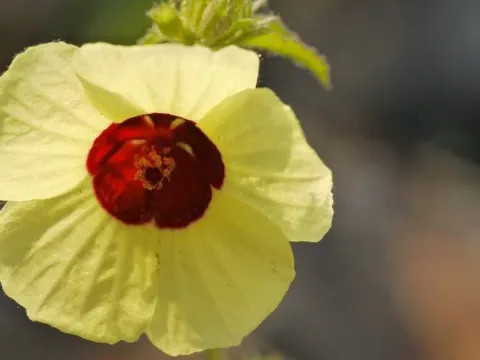
Hibiscus hispidissimus
Hibiscus hispidissimus
Sowing of Hibiscus hispidissimus is performed in spring once soil temperatures reach 15–18 degrees Celsius. Stable warmth is essential to ensure uniform germination and to prevent cold-induced seedling mortality.
What the section contains
Hibiscus hispidissimus
Seeds should be planted at a depth of 2 to 4 centimeters, depending on soil texture. Proper row spacing, typically between 45 and 60 centimeters, is crucial for optimal light penetration and nutrient uptake during the growth phase.
Before sowing, land preparation involves loosening the soil to create a fine tilth, which aids in establishing firm soil-to-seed contact and encourages consistent seedling emergence.
Seeding rates are adjusted based on the end-use objectives: higher plant densities are preferred for maximizing fiber yield, whereas lower densities are standard for seed production programs.
Seedlings typically emerge within 10 to 14 days post-sowing, provided that moisture and warmth are maintained, marking the beginning of the rapid vegetative growth stage.
This species is highly heat-demanding and thrives in areas with long, frost-free seasons. It requires full sunlight to maximize photosynthetic efficiency and ensure strong stem development.
The crop prefers fertile, well-drained loamy or sandy-loam soils. Poor drainage is a significant limiting factor, as waterlogged conditions increase the susceptibility to root-borne diseases and inhibit development.
Consistent moisture is required during the intensive stem elongation phase. While the plant shows some resilience, supplemental irrigation may be necessary during prolonged dry spells to maintain productivity.
Fertilization with nitrogen is essential for biomass development, while phosphorus and potassium application supports root system development and overall plant structural integrity.
Crop rotation practices should be strictly observed to prevent the build-up of soil pathogens and to maintain optimal soil health for subsequent planting cycles.
The yield of Hibiscus hispidissimus is heavily dependent on management practices and environmental conditions. Proper field maintenance can result in high-quality yields of both fiber and seeds.
Yield performance is measured by the total biomass of stalks suitable for bast fiber production, as well as the seed count per hectare at the end of the harvest season.
Maximizing yield involves early-stage weed management, as young plants are highly sensitive to competition for nutrients and space during their initial establishment period.
Technical maturity of the stalks is typically achieved shortly after flowering ceases, representing the point where fiber quality and tensile strength are at their peak.
Efficient mechanical harvesting is key to reducing losses and ensuring that the harvested material can be processed promptly, preserving the integrity of the fiber.
Aphid infestations are the most common pest threat, targeting young foliage and tender stems. Their feeding can cause stunted growth and significantly reduce plant vigor and biomass accumulation.
Fungal diseases, such as Fusarium wilt, are a major concern in environments with high humidity or poor soil drainage. These pathogens cause root degradation and systemic wilting.
Various leaf spot pathogens can reduce the effective photosynthetic area of the plant, potentially leading to lower overall crop productivity if the infection spreads rapidly.
Soil-dwelling nematodes can cause severe root damage, leading to yellowing of leaves and overall stunted plant development, particularly in fields with continuous monoculture.
Integrated pest management, including the use of biological control agents and resistant varieties, is recommended to mitigate risks and maintain crop health throughout the season.
Harvesting should be timed to coincide with the stage of technical maturity. Cutting the plants too early or too late can negatively affect fiber length and durability.
Post-harvest processing often involves retting, a process where microbial activity helps separate the valuable bast fiber from the woody core of the stem.
Seeds are harvested once the seed pods reach full maturity and dry out on the plant. Proper drying of the seed stock is necessary to ensure long-term storage stability and high germination rates.
Mechanical harvesting equipment should be calibrated to handle the specific height and density of the crop to ensure clean cutting and minimal damage to the biomass.
After the harvest, incorporating crop residues into the soil via discing is a beneficial practice that improves soil organic matter content and enhances future soil structure.