
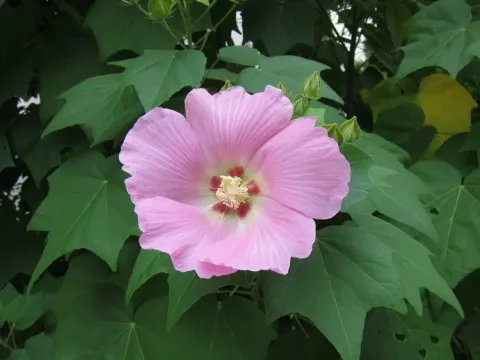
Hibiscus lavateroides
Hibiscus lavateroides
Sowing Hibiscus lavateroides should be carried out when soil temperatures consistently reach at least 15–18 degrees Celsius. Early season sowing requires protection from late frosts which can severely damage young seedlings.
What the section contains
Hibiscus lavateroides
It is recommended to soak seeds in warm water for several hours before planting to enhance germination rates. Direct seeding in rows allows for better weed control and creates a uniform stand for future growth.
The optimal planting depth is approximately 1–2 centimeters. Placing seeds too deep can significantly delay emergence and weaken the initial seedling growth in the competitive field environment.
If utilizing a nursery for starting seeds, sowing should begin in late winter to ensure robust transplants. These seedlings must be gradually acclimated to outdoor conditions before final transplanting.
Spacing between plants must be determined based on the cultivar's potential canopy size. Proper spacing is essential to ensure adequate airflow, which is critical for reducing humidity-related diseases.
As a member of the Malvaceae family, Hibiscus lavateroides requires full sun exposure to thrive. Inadequate light levels will lead to leggy growth and significantly reduced floral production throughout the season.
The crop prefers well-drained, fertile loam soils. Good soil structure is paramount, as the plant is highly sensitive to waterlogging which often leads to root rot and other physiological disorders.
Consistent moisture management is necessary during the vegetative and flowering stages. While the plant shows some drought tolerance once established, prolonged dry spells will stress the plant and affect flower size.
Soil pH levels should be maintained in the slightly acidic to neutral range. Periodic soil testing allows farmers to adjust nutrient availability through targeted fertilization programs focusing on phosphorus and potassium.
The plant is sensitive to strong, drying winds. Providing a windbreak or choosing a sheltered location can prevent physical damage to the delicate stems and petals of the plant during the growing season.
Aphids and spider mites are the primary pests that affect Hibiscus lavateroides, often proliferating during hot and dry conditions. Integrated pest management strategies are crucial for controlling these populations.
Fungal diseases like powdery mildew pose a risk during periods of high humidity and poor ventilation. Ensuring adequate space between individual plants is the most effective preventative measure against these infections.
Root rot, often caused by overwatering or poor drainage, can be fatal. If detected early, reducing irrigation and improving soil aeration can sometimes save the plant, but often entire sections must be removed.
Leaf spot pathogens may occur if the foliage remains wet for extended periods. Pruning the lower leaves to improve airflow and avoiding overhead irrigation can significantly mitigate this risk.
Regular field scouting is essential to identify early signs of infestation or infection. Early detection allows for prompt treatment, reducing the need for intensive chemical interventions later in the season.