
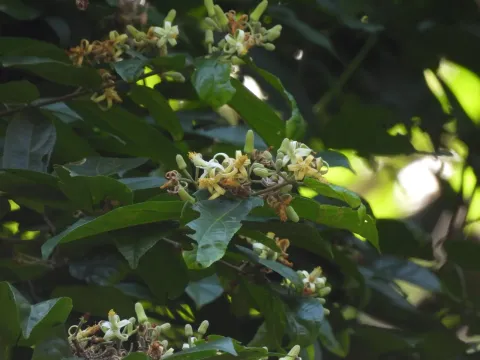
Grewia laevigata
Grewia laevigata
Grewia laevigata belongs to the Malvaceae family. It is an evergreen tree or large shrub with a native distribution spanning the tropical regions of Asia, including India, Indochina, and the islands of the Malay Archipelago.
What the section contains
Grewia laevigata
The plant prefers humid tropical conditions with above-average annual rainfall. It thrives in organic-rich loamy soils with good drainage but can adapt to other soil types if moisture levels are sufficiently maintained.
As a light-loving species, it requires areas with direct sunlight to promote intensive growth and the development of high-quality timber or biomass, while also benefiting from wind protection.
The optimal temperature range for active growth is between 22–30°C. The tree is highly sensitive to cold and cannot withstand frost, which restricts its cultivation area strictly to the tropical belt.
Agrotechnically, it is essential to provide regular irrigation during dry spells, especially for young saplings, as the root system requires consistent access to moisture to support vigorous canopy development.
The economic utility of Grewia laevigata is primarily associated with its timber, which is known for its durability and elasticity, making it highly suitable for furniture manufacturing and rural construction.
The fruits of the tree are edible, although they lack massive industrial demand. They are frequently consumed by local populations and used in traditional medicine preparations like teas and extracts.
The bark of the tree contains fibers that are utilized in basketry, rope production, and the manufacturing of simple textiles, positioning the plant as a source of valuable natural raw materials.
The leaves are frequently used as livestock fodder during dry seasons, offering sufficient nutritional value to maintain herd health within tropical farming systems.
Crop yield is directly influenced by planting density and the consistency of pruning practices, which stimulate the growth of young shoots containing the highest concentration of useful fibers and biomass.
Key pests affecting this crop include various species of aphids and leaf-eating caterpillars, which can significantly reduce the overall photosynthetic leaf area and stunt the plant's growth rates.
Fungal infections, such as powdery mildew or leaf spot, tend to develop in conditions of high humidity and poor air circulation within dense plantations, requiring preventative management strategies.
Root rot issues may arise if there is water stagnation in the soil; therefore, it is vital to ensure efficient drainage and soil aeration when establishing new Grewia laevigata plantations.
To control pest outbreaks, an integrated pest management approach is recommended, including the timely pruning of infested branches and the use of biological control agents to mitigate insect pressure.
Monthly monitoring of the plantation is advised to identify early symptoms of disease, ensuring that interventions remain localized and minimizing the reliance on chemical fungicides.