
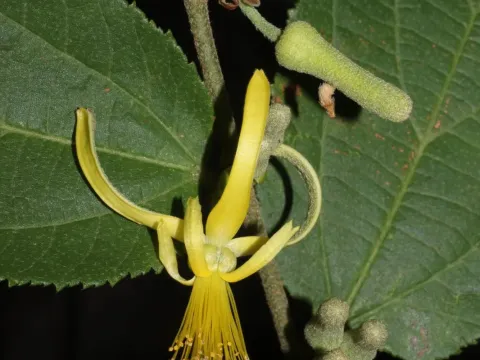
Grewia flavescens
Grewia flavescens
Grewia flavescens, a member of the Malvaceae family, propagates primarily through seeds within its native range. Sowing is typically carried out at the onset of the rainy season when soil moisture levels are sufficient to trigger germination.
What the section contains
Grewia flavescens
In nursery settings, seeds often require scarification due to their hard seed coat, which significantly improves the germination rate. The optimal planting depth is approximately 1-2 centimeters to ensure proper establishment of the root system.
For controlled indoor environments, maintaining a substrate temperature of at least 25 degrees Celsius is essential. Seedlings generally emerge within 2-4 weeks, requiring protection from direct sunlight during their first month of development.
Transplanting to a permanent location is recommended once the saplings reach a height of 30-40 centimeters. This size ensures the plant has enough vigor to adapt to open field conditions and effectively compete with surrounding vegetation.
Planting density varies based on intended use, but for creating dense hedges or shelterbelts, a spacing of 1.5 to 2 meters between individual plants is generally advised for optimal results.
This species is an exceptionally hardy perennial shrub or small tree, native to tropical and subtropical regions of Africa. It is naturally adapted to savannahs, woodlands, and rocky slopes, demonstrating high resilience to environmental stress.
The plant exhibits significant drought tolerance and thrives in poor, nutrient-deficient soils. While it prefers well-drained sandy or loamy substrates, it is capable of withstanding periodic waterlogging without severe damage.
For peak vegetative growth and fruit production, Grewia flavescens requires full sun exposure. Significant shading leads to reduced productivity and causes the plant to develop weak, leggy stems that are prone to mechanical damage.
The ideal temperature range for active growth is between 20 and 35 degrees Celsius. While it possesses moderate frost resistance, younger shoots are susceptible to damage from sub-zero temperatures, which restricts its cultivation range.
Maintenance is relatively low, focusing primarily on removing dead wood and performing occasional weeding in the root zone during the first few years to prevent competition for resources.
The primary agricultural utility of Grewia flavescens lies in its edible fruits, which are highly valued locally for their taste and nutritional content. Yields fluctuate based on seasonal climatic conditions and water availability.
The fruits are small, yellow to orange drupes that ripen progressively over a season, allowing for a sustained harvest period. A single mature shrub can produce several kilograms of fruit annually under favorable conditions.
Beyond fruit production, the plant serves as a vital fodder source. The foliage is rich in protein, making it an excellent feed supplement for livestock, particularly during the dry season when green forage is otherwise scarce.
In agroforestry systems, the plant is valued for its dense canopy, which provides protection against soil erosion. Its foliage production can be quite significant when the plant is managed through selective pruning.
The wood of Grewia flavescens is known for its durability and flexibility. It is widely used for crafting tool handles, household equipment, and traditional weaving materials, adding economic value beyond food and fodder.
Grewia flavescens is generally a hardy species with a robust natural immunity against most common plant pathogens. However, in regions with excessively high humidity, fungal leaf spot infections can occasionally occur.
Pest pressure is usually minor, though young seedlings may be targeted by various leaf-eating caterpillars and beetles that can reduce photosynthetic capacity. Scale insects may also occasionally infest the stems in hot, dry climates.
Management of these pests involves mechanical removal or the application of organic insecticidal oils. Root-knot nematodes can occasionally pose a threat if the plant is grown in poorly drained, compacted clay soils.
- Regular monitoring of foliage for pest damage.
- Prompt removal and disposal of infected branches.
- Ensuring soil aeration to prevent root-related issues.
Fruit harvesting is primarily done by hand as the drupes reach maturity. Timely harvest is critical, as overripe fruits tend to drop quickly and lose their quality, making them less suitable for consumption.
For fodder production, harvesting involves controlled branch pruning. This practice is often combined with crown rejuvenation to stimulate fresh growth and maintain high biomass productivity over many years.
Post-harvest, the fruits should be stored in a cool environment, as their shelf life in fresh form is limited. For longer-term use, the berries are frequently dried, which helps preserve their nutritional value.
When harvesting wood, it is best to perform cuttings during the plant's dormant season when sap flow is low. This ensures better wood quality and increases the longevity of the items manufactured from it.
The entire harvest process is managed to minimize stress on the parent plant, ensuring that the shrub remains productive and healthy for many subsequent seasons.