
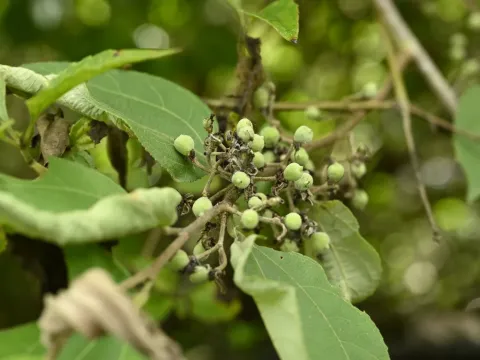
Grewia eriocarpa
Grewia eriocarpa
Grewia eriocarpa is a woody perennial shrub belonging to the Malvaceae family. Its native range spans across the tropical and subtropical regions of Asia, specifically inhabiting parts of India, Indochina, and southern China, where it has evolved to thrive in seasonal monsoon environments.
What the section contains
Grewia eriocarpa
The plant prefers well-drained, fertile loamy soils with a neutral to slightly acidic pH range. In its wild habitat, Grewia eriocarpa is typically found in deciduous forests, suggesting a need for partial shade during early growth stages, while mature specimens benefit significantly from direct solar exposure.
Successful cultivation requires a warm climate free from frost, as the vegetation is susceptible to temperature fluctuations. Optimal growth is observed at temperatures ranging between 22 and 30 degrees Celsius, supported by consistent irrigation throughout the drier months.
Agronomic management includes maintaining adequate soil moisture and applying organic fertilizers to boost biomass production. Propagation is generally performed via seeds, although research into vegetative methods such as cuttings is ongoing to ensure the consistency of desirable plant traits.
The economic value of this culture lies in the bioactive compounds found within its bark, leaves, and fruits. It is traditionally utilized in the pharmaceutical industry and ethnobotanical applications, while also serving as a sustainable source of natural fibers and timber for local industry.
The primary threats to healthy crop development are fungal root diseases, often exacerbated by waterlogged soil and poor drainage systems. It is critical to monitor moisture levels closely to prevent the onset of root rot which can devastate young plants.
Insect pests, including aphids and spider mites, pose a significant risk during hot and dry weather by damaging leaf tissue and reducing plant vigor. Early detection and localized monitoring are key strategies to control these populations without reliance on harsh chemicals.
Weed pressure during the first two years is a major limiting factor for Grewia growth. Consistent weeding and the use of mulch around the base of the plants effectively suppress competition and significantly improve survival rates for young shrubs.
Soil-borne pathogens require strict adherence to crop rotation practices and the sterilization of propagation material. The application of beneficial bacteria-based biofungicides is recommended as a proactive measure for long-term plantation health.
Minimizing biomass loss involves careful management of planting density to ensure proper canopy aeration. Good airflow is the best natural defense against pathogen spore accumulation and mold development within dense foliage.