
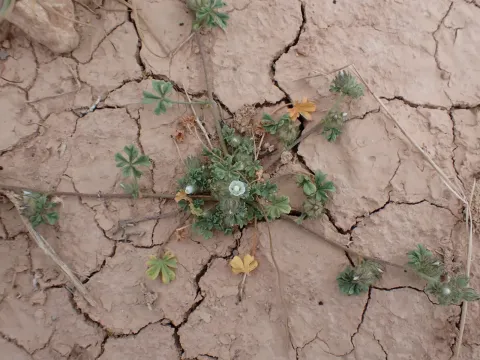
Althaea ludwigii
Althaea ludwigii
Althaea ludwigii is an annual herbaceous plant belonging to the Malvaceae family. In its native habitat, it is perfectly adapted to the cycle of seasonal rains, allowing it to complete its growth, flowering, and seed production phases in a relatively short timeframe.
What the section contains
Althaea ludwigii
When cultivated, sowing is performed once the soil temperature is consistently above the threshold for germination. The seeds require stable moisture to break dormancy, but they should not be kept in waterlogged soil which could cause decay before sprouting.
The seeds are typically sown at a depth of 1 to 2 centimeters. Shallow planting is essential because the small seedlings need to reach the surface quickly before their internal energy reserves are exhausted, ensuring a robust start to their development.
Row spacing should be maintained between 40 and 50 centimeters. This provides sufficient room for the sprawling habit of the plant and facilitates adequate airflow, which is crucial for preventing the buildup of humidity around the base of the plant.
Preparation of the seedbed must include thorough mechanical weeding. As a young plant, Althaea ludwigii competes poorly with aggressive weeds, so keeping the area clear during the first few weeks is vital for successful crop establishment.
This species is native to arid and semi-arid regions, ranging from the Mediterranean to parts of Central Asia. It thrives in environments with high light intensity and can withstand extended periods of dry weather without supplemental irrigation.
The ideal soil for this crop is well-drained and sandy or loamy. Because it naturally occurs in regions with limited rainfall, it has evolved to avoid heavy, clay-rich soils that retain moisture for too long and potentially suffocate the root system.
Regarding soil chemistry, the plant prefers neutral to slightly alkaline pH levels. In highly acidic environments, the nutrient uptake efficiency decreases, which can result in stunted growth and a significant reduction in biomass yield.
Althaea ludwigii requires full sun throughout the day to reach its full potential. Even partial shade can lead to leggy, weak stems that are more susceptible to falling over or being damaged by mechanical stress or pests.
Cultural practices should emphasize consistent but light irrigation. The objective is to keep the soil moist enough for active growth without creating a saturated environment, as the roots are highly sensitive to anaerobic conditions caused by standing water.
Fungal diseases are the primary threat, especially in seasons with higher than average humidity. Powdery mildew can quickly cover the leaves with white spores, significantly reducing the plant's ability to photosynthesize effectively.
Pests such as aphids are frequently observed on the tender undersides of the leaves. While the plant can handle light infestations, large colonies can weaken the plant and serve as vectors for secondary viral infections.
Root rot is the most serious threat, usually resulting from poor drainage or excessive rainfall in a short period. Once the infection reaches the taproot, the plant is often impossible to save, so prevention is the primary strategy.
Foliage-feeding insects can cause cosmetic and structural damage to the leaves. Monitoring the field regularly allows for early detection, which makes it easier to manage the situation before significant damage occurs to the crop yield.
Successful management of threats relies heavily on avoiding monoculture cropping. Rotating the fields with non-Malvaceae plants every two or three years helps to break the life cycles of soil-borne pathogens and typical pests.