
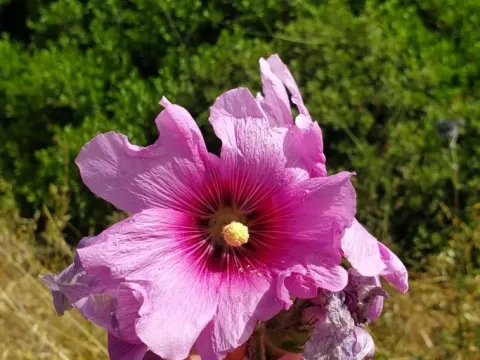
Alcea setosa
Alcea setosa
Sowing of Alcea setosa is typically performed in the spring season when soil temperatures reach 10–12°C. Mid-April to early May is considered the ideal window, allowing the seeds to utilize soil moisture from snowmelt for uniform germination.
What the section contains
Alcea setosa
The sowing technology involves using precision seeders at a depth of 2–3 centimeters. It is essential to maintain optimal plant spacing to prevent overcrowding, which can lead to stunted growth in individual specimens.
In regions with temperate winters, dormant sowing is possible, leading to earlier emergence the following year. However, this method requires rigorous weed control during the early development phase of the seedlings.
Field preparation begins with deep plowing in the autumn, followed by spring harrowing to conserve moisture. A well-structured seedbed is fundamental for ensuring high germination energy and vigorous growth.
After emergence, mechanical inter-row cultivation is recommended to eliminate weeds. This practice significantly accelerates the development of Alcea setosa in the early vegetative stages.
Alcea setosa belongs to the Malvaceae family and is a perennial herbaceous plant. Native to the Middle East and the Eastern Mediterranean, it is well-adapted to open, sunny environments.
The crop has moderate soil fertility requirements but thrives in loamy or sandy soils with excellent drainage. Its high drought tolerance makes it a promising crop for cultivation in arid climates.
An optimal soil pH ranges from 6.0 to 7.5. Waterlogging or stagnant groundwater is detrimental to the root system, frequently inducing root rot and reducing overall plant health.
This species is highly photophilic and requires full sun exposure throughout the day. In shaded conditions, stems tend to become elongated and structurally weak, which reduces the total biomass yield.
While the plant is not highly temperature-sensitive, it achieves maximum productivity in regions with long, hot summers. Mature plants exhibit resilience to short-term frosts, especially when protected by snow.
The agricultural use of Alcea setosa includes biomass production for forage and fiber extraction from the stems. Yield levels are significantly influenced by planting density and seasonal rainfall patterns.
With intensive management, green biomass yields can reach 30–40 tons per hectare. While yields may fluctuate in dry years, the plant remains viable, making it suitable for marginal land cultivation.
The seed yield of this species is relatively high, allowing farmers to maintain a sustainable cycle of planting material production. Harvest of seeds occurs once the seed capsules have fully matured.
Crop quality depends heavily on harvesting timing; delayed harvest can lead to seed shedding and increased fiber lignification, which negatively impacts the technical properties of the harvested material.
Economic efficiency is bolstered by the application of balanced NPK fertilizers, particularly during the active growth phase, which promotes faster biomass accumulation and root development.
Common pests include various aphid species and weevils that damage buds and young leaves. In conditions of high humidity, rust infections on foliage are a common threat to plant development.
Fungal diseases like anthracnose may occur if the stand density is too high, leading to poor air circulation within the field. Maintaining proper spacing and timely weeding are essential preventive measures.
Powdery mildew is also a frequent disease affecting the Malvaceae family, particularly towards the end of the summer season. It causes premature leaf desiccation and decreases the biomass quality.
Effective pest management relies on regular field scouting and the judicious use of biological insecticides when pest populations exceed the economic threshold for damage.
Adhering to a proper crop rotation plan is crucial for managing the soil-borne pathogen load. It is strongly advised not to plant Alcea setosa in fields previously used for related Malvaceae crops.
Harvesting for green biomass should be carried out during the peak flowering stage when nutrient concentration in the leaves and stems is at its maximum. Mechanical forage harvesters allow for efficient crop collection.
For fiber production, harvest is delayed until the stems become more mature and structurally robust. Ensuring rapid drying of the harvested biomass is vital to prevent decomposition and quality loss.
Seed harvesting is conducted when the majority of the capsules turn brown and dry. The collected seeds are then cleaned and dried in well-ventilated storage areas to ensure longevity.
After harvest, residual plant matter can be shredded and incorporated back into the soil as organic matter. This practice improves soil structure and enhances the fertility profile for subsequent crops.
Storage of seeds requires a controlled environment with humidity levels below 12% in cool conditions to preserve high germination rates over several seasons.