
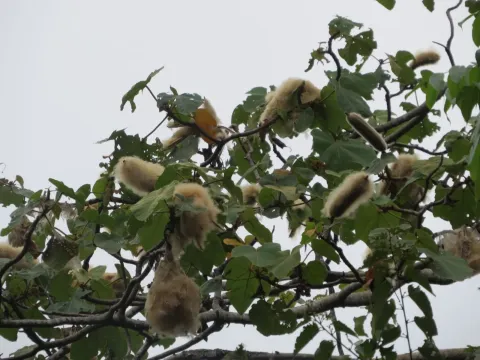
Balsa tree
Ochroma
Balsa seeds are typically sown in specialized nurseries within well-prepared, loose substrates. The optimal sowing time aligns with the start of the rainy season to ensure high germination rates.
What the section contains

Balsa tree
Seedlings are raised in containers until they reach a height of 30 to 50 centimeters. After a period of acclimatization, the young trees are transplanted into permanent plantation sites.
Maintaining a weed-free environment is critical, as young Ochroma trees are highly sensitive to shading and competition for resources during their initial growth stages.
A standard planting density involves approximately 9 to 16 square meters per tree, allowing sufficient space for the rapid development of the trunk diameter.
Following transplantation, regular monitoring is essential to ensure saplings are protected from wind damage and competition until they become firmly established in the soil.
Balsa is a fast-growing tropical species within the Malvaceae family, native to Central and South America. It thrives in humid tropical rainforest environments.
The tree requires consistently high temperatures throughout the year, ideally between 22 and 30 degrees Celsius. It is highly vulnerable to even slight frost conditions.
Ochroma prefers deep, fertile, and well-drained soils. While it loves moisture, it cannot tolerate waterlogged ground, which can lead to rapid root decay.
As a pioneer species, balsa is highly heliophilic and requires full, unobstructed sunlight to achieve its potential growth rate; shading severely hinders development.
Plantations should be established in areas protected from high winds, as the extremely low density of balsa wood makes the trees susceptible to snapping during storms.
The balsa tree is renowned as one of the fastest-growing trees globally, reaching heights of 20 meters and significant trunk girth within 6 to 8 years.
The primary economic output is its incredibly lightweight timber, which is highly valued in industries ranging from model building to high-end insulation and rescue equipment.
Yields per hectare are highly competitive due to the short harvest cycle of 7 to 10 years, making balsa an attractive species for sustainable commercial forestry.
Harvesting is typically carried out through clear-felling, with logs processed immediately to prevent degradation due to the high water content of the living wood.
Beyond timber, Ochroma can be utilized for fiber production and biomass applications, adding value to the total output of the plantation.
The most significant threats to balsa plantations include fungal root infections, which are often exacerbated by poor drainage and excessive soil moisture.
Pests, particularly wood-boring beetles, can cause severe damage by creating tunnels in the soft timber, significantly reducing the commercial quality of the wood.
Leaf-eating insects can hinder growth rates in young saplings, making regular health inspections necessary during the early stages of plantation development.
Preventative management involves strict site sanitation, including the removal of infected or damaged trees that could serve as breeding grounds for pathogens.
Balanced soil fertility is vital for maintaining the trees' natural defenses, reducing their susceptibility to common tropical pests and diseases.
Harvesting balsa is best performed during the dry season to facilitate access for heavy machinery and ensure the efficient transport of logs from the plantation site.
Freshly felled logs must undergo immediate primary processing, as the high water content makes the wood extremely heavy and prone to rapid fungal decay if left untreated.
Forced kiln drying is a mandatory step, as it preserves the unique porosity and insulation properties of the wood while preventing deformation and splitting.
Waste biomass from logging, such as branches and bark, can be recycled as organic mulch, contributing to the nutrient cycle and soil health for future planting cycles.
The final dried product is sorted based on density and structural integrity, then packaged for international export or domestic industrial use.