
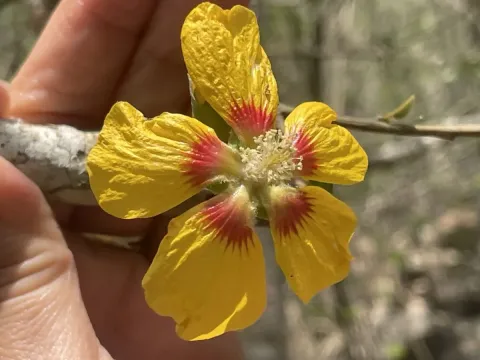
Bakeridesia
Bakeridesia
Sowing Bakeridesia seeds in nursery environments is best performed during early spring to leverage increasing daylight hours, which promotes robust initial growth.
What the section contains

Bakeridesia
Optimal germination requires consistent temperatures between 22 and 25 degrees Celsius, alongside a stable and moderate level of moisture within the planting medium.
Pre-soaking seeds in warm water or growth stimulants is highly recommended to soften the tough seed coats common among many species of the Malvaceae family.
The seeding substrate must be lightweight and porous, incorporating materials like perlite or peat to ensure excellent drainage and prevent the dampening off of seedlings.
Once true leaves develop, plants should be transplanted into individual containers to allow the root system to expand without competition, strengthening the overall plant structure.
Bakeridesia is a genus within the Malvaceae family, naturally occurring across the tropical and subtropical regions of the Americas, thriving in warm environments.
The plant is strictly frost-intolerant, necessitating cultivation in controlled greenhouse environments or strictly frost-free climatic zones to survive and develop properly.
Soil quality is paramount; the plants perform best in fertile, well-draining soils with a neutral pH, enriched with organic matter to support rapid vertical development.
Sunlight exposure is essential for this culture, as high levels of light intensity are required to stimulate proper flower formation and maintain the plant's structural integrity.
Careful irrigation management is required; while Bakeridesia enjoys consistent moisture, waterlogged soils are detrimental and often lead to root rot and fungal infections.
Like many species in the Malvaceae family, Bakeridesia can be susceptible to common pests such as aphids and whiteflies, especially when grown in closed greenhouse conditions.
Fungal pathogens represent the most significant threat, particularly when air circulation is poor or humidity levels are kept consistently too high for the plant's needs.
Early detection of spider mites is essential, as these pests can proliferate rapidly in warm and dry environments, leading to leaf drop and decreased vigor of the plant.
Regular inspection of the foliage, especially the undersides of leaves, helps in identifying and managing potential pest infestations before they spread across the crop.
Maintaining a clean growing environment and providing adequate spacing between plants are the most effective cultural methods for minimizing the impact of these threats.
As Bakeridesia is primarily valued for its ornamental characteristics, harvesting focuses exclusively on the collection of seeds for propagation and nursery stock maintenance.
Seed collection should be timed with the maturation of the fruit capsules, typically occurring when the pods transition from green to a brittle, brown appearance.
Proactive monitoring is necessary to capture the seeds before the capsules undergo natural dehiscence, which would otherwise result in significant seed loss.
Collected materials should be dried in well-ventilated, shaded areas to ensure any residual moisture is removed, thereby preventing the development of mold during storage.
Properly cleaned and dried seeds retain high viability when stored in cool, dark, and dry conditions, making them suitable for use in the subsequent cultivation cycle.