
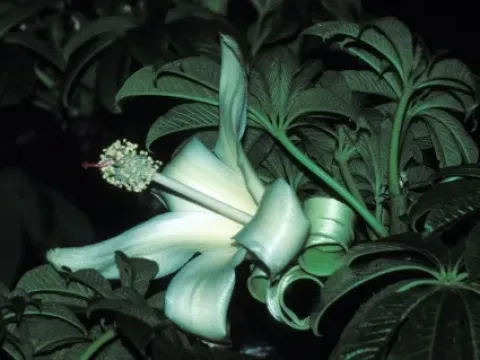
Adansonia perrieri
Adansonia perrieri
Adansonia perrieri is primarily propagated via seeds. In natural environments, the seeds undergo scarification through animal digestion, so in cultivation, mechanical treatment of the seed coat is recommended to enhance germination.
What the section contains
Adansonia perrieri
The optimal time for sowing is during spring, when soil temperatures consistently remain above 22-25 degrees Celsius. Ensuring excellent drainage in the substrate is crucial to prevent embryo decay.
Seeds should be planted at a depth of 2-3 centimeters. Using sterile sand and peat mixtures significantly reduces the risk of fungal infections in seedlings during the early stages of development.
Germination can be uneven, with the process ranging from several weeks to a couple of months. It is essential to maintain consistent moisture without waterlogging until the first true leaves emerge.
The seedling method allows for better control over root system development, which tends to thicken rapidly in this species. Transplantation to a permanent site must be handled carefully to avoid damaging the taproot.
Adansonia perrieri belongs to the Malvaceae family and is endemic to the northern part of Madagascar. This tree prefers dry tropical forests and is adapted to a distinct seasonal climate.
The plant is highly demanding regarding light exposure and does not tolerate shading. Direct sunlight is vital for normal photosynthesis and the formation of its characteristic massive trunk.
The soil requirements are specific: it must be loose, well-drained, and have a neutral or slightly acidic pH. Water stagnation is a fatal factor leading to the rapid decay of the root system.
The temperature range during the active growth period should be between 25-35 degrees Celsius. In winter or during the dry season, the tree enters a dormancy phase and sheds its leaves as a natural defense.
During cultivation, it is important to simulate a dry season by significantly reducing irrigation. Excessive moisture during dormancy triggers rot in the trunk, which acts as a water reservoir.
Adansonia perrieri is not a traditional agricultural crop in industrial terms; therefore, standardized quantitative yields for fruits or timber do not exist.
Its economic value lies in the fruit, which contains pulp rich in vitamins and organic acids. Harvesting is typically conducted manually once the fruits reach full maturity on the tree.
Productivity depends heavily on the age of the tree and environmental conditions. In the wild, old trees can yield hundreds of fruits, while cultivated yields may vary significantly.
Baobab seeds are used to extract valuable oil for cosmetics and food industries. Yield stability is directly linked to precipitation levels during the flowering season.
The development of this species as an agricultural object is constrained by its slow growth rate. Significant economic returns from plantations are only realized decades after planting.
The primary threat to young plants is pathogenic fungi that develop under conditions of substrate overwatering. Root rot can destroy a seedling within days.
Among pests, sap-sucking insects such as aphids and spider mites are the most dangerous, attacking foliage during active growth if humidity levels are high.
The wood of mature trees can be affected by wood-boring pests, although specific entomological threats to this rare species are not yet fully documented.
Biotic risks include herbivores that can damage the bark and young shoots. In agricultural practice, installing protective fences around young trees is mandatory.
Climate change and habitat degradation in Madagascar make this species vulnerable, making soil health management a priority for minimizing external risks.
Harvesting Adansonia perrieri fruits occurs during the dry season when the fruit shell becomes dry and brittle. Collection is performed when fruits reach full biological maturity.
Specialized equipment is often needed to reach fruits on high branches. It is vital to harvest carefully to avoid damaging the fruit buds for the following season.
After collection, the fruits require drying in shaded, well-ventilated areas to prevent pulp spoilage and mold development inside the fruit capsule.
Long-term storage is only possible if low humidity is maintained in storage facilities. Traditional methods involve using woven baskets to ensure constant air circulation.
Seeds are extracted after cleaning the dry pulp. They retain high viability if stored in a cool, dark place with minimal moisture.