
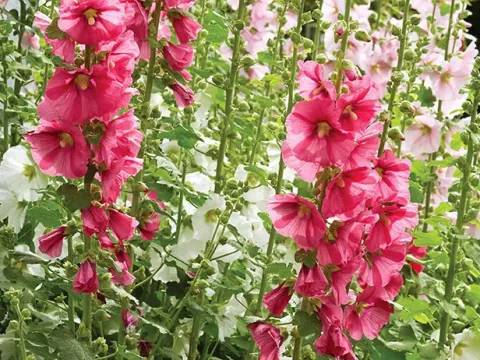
Alcea hybrids
Alcea hybrids
Sowing seeds of Alcea hybrids can be done in the spring, typically from April to May, directly into prepared soil. For optimal results, seeds should be sown at a depth of 2–3 cm, ensuring they are placed at least 45 cm apart to allow for proper airflow.
What the section contains
Alcea hybrids
For those preferring an earlier start, seeds can be started indoors in February or March. Using seedling trays ensures higher germination rates, though it is vital to transplant carefully as these plants possess sensitive taproots that do not tolerate disturbance well.
The ideal temperature for germination is between 18°C and 20°C. Once the seedlings develop two or three true leaves, they should be hardened off before moving them to their permanent location in the garden, usually after the last risk of frost has passed.
Fall sowing is also an option in milder climates, where seeds are planted in September. This allows the plants to establish their root systems before the onset of winter, leading to more robust growth during the following season.
Regardless of the method, consistent moisture is required until germination is complete. Over-watering should be avoided, as stagnant water can cause the seeds to rot before they have a chance to sprout.
Alcea hybrids, members of the Malvaceae family, thrive in sunny, open locations. They require at least six hours of direct sunlight per day to produce their signature tall, vibrant flower spikes.
The soil should be fertile, well-draining, and neutral in pH. If the garden soil is heavy clay, incorporating organic matter or compost is recommended to improve texture and facilitate better root penetration.
While somewhat drought-tolerant once established, Alcea hybrids require regular watering during the peak growing season, particularly during dry spells. Consistent moisture helps sustain the rapid growth of stems and the development of large flower buds.
Staking is a critical maintenance task for this species, as the tall flower stalks can reach up to 2 meters in height. Secure them to sturdy bamboo or metal supports to prevent wind damage or collapse during heavy rain.
Annual fertilization with a balanced, slow-release fertilizer in early spring promotes strong growth and extended flowering periods. Avoid high-nitrogen fertilizers later in the season to prevent weak, brittle stem development.
Hollyhock rust (Puccinia malvacearum) is the most significant disease affecting Alcea hybrids. It presents as small, raised orange or brown pustules on the underside of the leaves, eventually causing the leaves to yellow and drop off prematurely.
Sanitation is key to managing this disease. Infected leaves should be picked and destroyed immediately, and the ground around the plant should be cleared of all fallen debris to prevent fungal spores from overwintering.
Aphids and spider mites are the most common pests for hollyhocks. These insects feed on the undersides of leaves, causing curling and stippling. Regular inspections and the use of insecticidal soap or neem oil can help control populations.
Slugs and snails can be particularly problematic for young, emerging growth in the spring. Using copper tape, grit, or non-toxic baits can protect the vulnerable sprouts until the plant is mature enough to withstand minor feeding.
To keep the plants healthy, ensure sufficient spacing to allow for adequate air circulation. Denser plantings lead to higher humidity levels around the foliage, which is a major contributing factor to the rapid spread of fungal infections.