
Struthanthus orbicularis
Struthanthus orbicularis
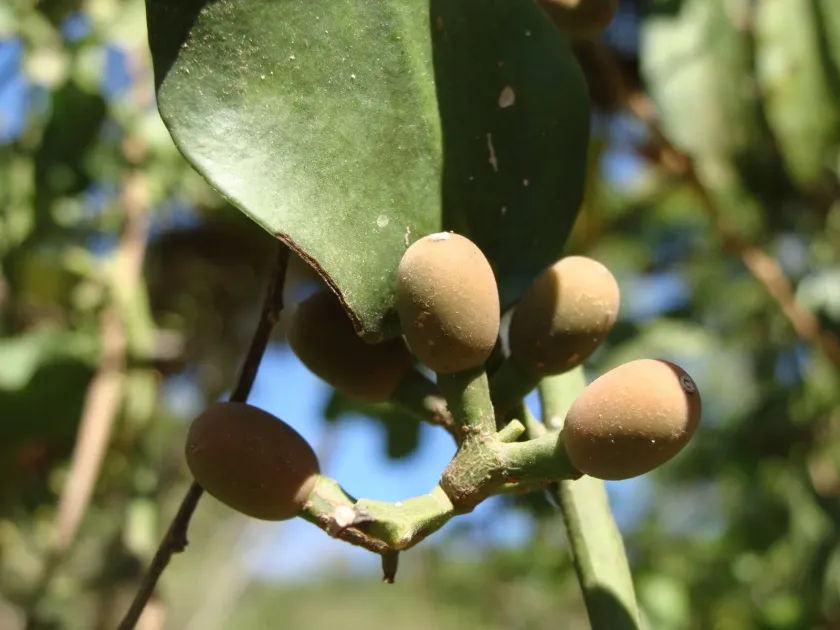
Description
Growing requirements
Struthanthus orbicularis is a member of the Loranthaceae family, known for its hemiparasitic lifestyle. It grows as an epiphyte, attaching itself to host trees in the tropical forests of Central and South America.
The species requires a tropical climate with consistent high humidity and stable temperatures throughout the year. It thrives in high light environments, typically colonizing the canopy layers of its host plants.
Morphologically, the plant utilizes specialized haustoria to anchor into the host plant's stems. These organs are essential for extracting water and vital nutrients, making the plant dependent on the host for survival.
Botanical studies indicate that the leaves are adapted to manage water loss effectively, which is crucial for plants living high above the ground. The growth rate is largely determined by the vigor of the host plant.
Cultivation of this species is largely non-agricultural and is primarily conducted in botanical research settings. It is considered an important species for ecological studies regarding plant-host interactions in tropical ecosystems.
Main diseases and pests
The plant faces several threats, including fungal infections that target the stems and leaves during periods of excessive rainfall. These pathogens can significantly reduce the vitality of the plant.
Various insect pests, including specific beetle larvae that feed on succulent stems, serve as natural limiting factors. In some environments, these insects play a role in balancing the parasite population.
Habitat loss due to deforestation remains the most significant threat to the survival of the species. As host trees disappear, the population of Struthanthus orbicularis decreases proportionally.
Preventive care for the plant involves maintaining optimal air circulation to minimize the risk of rot. Overwatering or stagnant conditions are highly detrimental to the plant's delicate structures.
Research into pest resistance focuses on the chemical defense mechanisms of the host tree, which often try to compartmentalize the haustorial attachment sites to inhibit the parasite.