
Passovia pyrifolia
Passovia pyrifolia
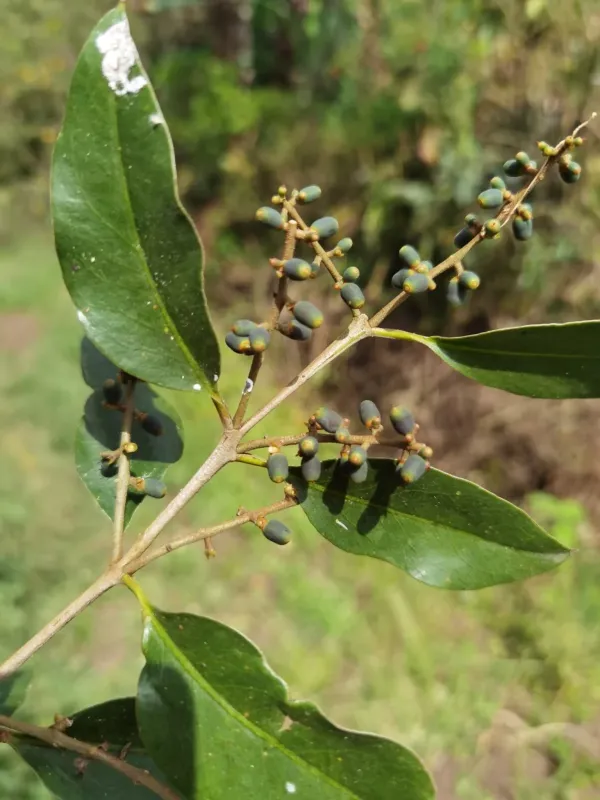
Description
Growing requirements
Passovia pyrifolia belongs to the Loranthaceae family, a group of plants known for their hemiparasitic nature. It is typically found as an epiphyte, attaching itself to the branches of host trees to access vital water and nutrients through specialized structures called haustoria.
The native habitat of this species is spread across the tropical regions of South and Central America. It thrives in diverse forest ecosystems where a humid climate provides the necessary conditions for the successful germination of its seeds on tree bark.
Botanically, the plant is characterized by its distinct pear-shaped leaves and branched stems. The haustorial system allows the plant to integrate into the vascular tissues of the host, facilitating the extraction of xylem sap, which provides the plant with essential mineral salts.
Climate requirements for this species are strictly tropical. It needs consistent high temperatures and high ambient humidity throughout the year. It does not possess adaptations for surviving cold winters, which makes it unsuitable for cultivation outside of its native ecological niche.
From a хозяйственное usage perspective, Passovia pyrifolia is not a standard agricultural crop. Instead, it holds scientific value in tropical botany, ecology, and the study of plant-parasite interactions within complex forest environments.
Main diseases and pests
The primary threat to Passovia pyrifolia is habitat loss caused by deforestation. As tropical forest canopy cover decreases, the availability of suitable host trees declines, leading to a direct reduction in the population of this parasitic plant.
The species is susceptible to various tropical insect pests that specialize in feeding on mistletoe-like plants. These pests can significantly damage the stems, causing the plant to lose vigor and reducing its reproductive capacity.
Fungal infections pose a threat, particularly in areas with stagnant air circulation. These diseases can attack the haustoria or the vegetative parts of the plant, especially when the overall health of the host tree is compromised by environmental stress.
Competition for sunlight from other epiphytes, vines, and canopy foliage can restrict the growth of Passovia pyrifolia. As a light-demanding organism, shading from encroaching vegetation significantly impacts its ability to photosynthesize effectively.
Chemical runoff and pollution in areas neighboring forest regions can impact the plant's health indirectly. Given its sensitive nature and dependence on the host tree's physiology, environmental toxins can disrupt the delicate balance between the parasite and the host.