
Cannonball tree
Couroupita guianensis
Description
Growing requirements
The cannonball tree (Couroupita guianensis) belongs to the Lecythidaceae family. It is a large, evergreen tropical tree known for its spectacular flowers and unique, hard-shelled fruits that resemble large cannonballs.
Originating from the tropical forests of Central and South America, this species thrives in environments with high humidity and consistent tropical temperatures. It is strictly frost-sensitive and requires a frost-free climate year-round to flourish.
For cultivation, the tree prefers deep, well-draining loamy soils rich in organic matter. While it enjoys a moist environment, waterlogging must be strictly avoided as it can quickly lead to root decay and overall plant decline.
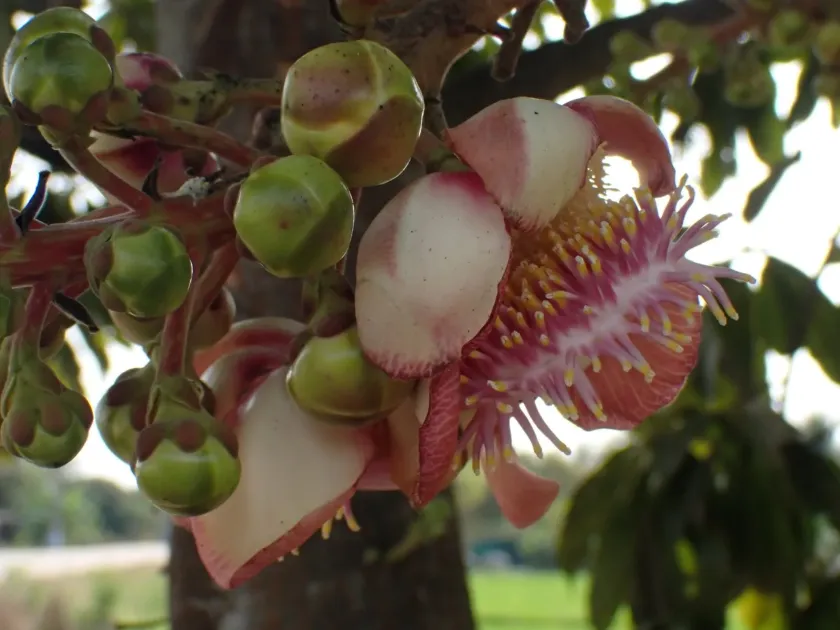
A striking botanical characteristic is its cauliflorous nature, where the large, fragrant flowers and fruit emerge directly from the main trunk and woody branches. This trait necessitates careful management of the tree's architecture in plantations.
Agricultural management includes ensuring adequate spacing, as the tree develops a wide and dense crown. Regular maintenance involves nutrient management, specifically providing micronutrients common in tropical soils to prevent chlorosis.
Yield
The tree produces massive, woody fruits which, while edible, are often used for traditional medicinal purposes or as local craft materials. Yields are typically high once the tree reaches maturity, which usually happens after several years of growth.
In various agricultural contexts, the seeds and fruit pulp are explored for potential pharmaceutical applications due to the presence of secondary metabolites. The tree serves as a high-value botanical specimen in tropical agroforestry systems.
Main diseases and pests
Common threats include leaf-eating insects and sap-sucking pests such as scale insects and mealybugs. These are primarily managed through manual removal or integrated pest management strategies tailored for tropical climates.
Fungal pathogens causing root rot or stem blight pose a significant threat during periods of excessive rainfall. Ensuring optimal air circulation and drainage is the primary defense against such horticultural challenges.