
Careya herbacea
Careya herbacea
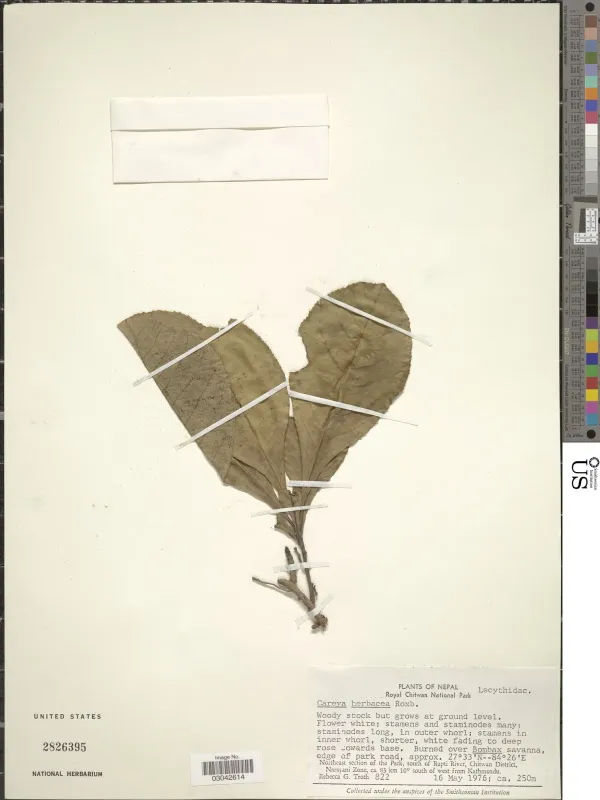
Description
Growing requirements
Careya herbacea is a distinct herbaceous perennial belonging to the Lecythidaceae family. Unlike the larger tree-like species within the genus Careya, this plant remains low-growing, often adopting a sub-shrub habit that is unique among its relatives.
The plant is native to the northern and eastern parts of India and surrounding regions of Nepal. It is primarily found in open grasslands, forest edges, and scrubby areas that experience a distinct tropical monsoon climate throughout the calendar year.
Successful development of this species requires well-drained, nutrient-rich soils. It thrives in environments where it can receive ample light, though it shows significant resilience to variations in soil moisture due to its underground storage organs.
One of the most notable biological traits of this plant is its ability to die back to the ground level during unfavorable dry seasons. The robust rootstock remains dormant under the soil surface, re-sprouting vigorously when conditions become suitable again.
The economic and practical uses of Careya herbacea are largely linked to its traditional applications in ethnomedicine. Local communities have historically utilized various plant parts for their therapeutic properties, which are currently being analyzed by modern botanical science.
Main diseases and pests
Like many plants growing in humid tropical zones, this species is susceptible to various fungal pathogens. Excess humidity and lack of proper soil aeration can lead to root rot, which is the most critical threat to the plant's health in cultivation.
Insect pests such as leaf-eating beetles and caterpillars often target the foliage during the peak growing season. While the plant can usually recover from minor damage, significant infestations can weaken the rootstock and inhibit its future regenerative capacity.