
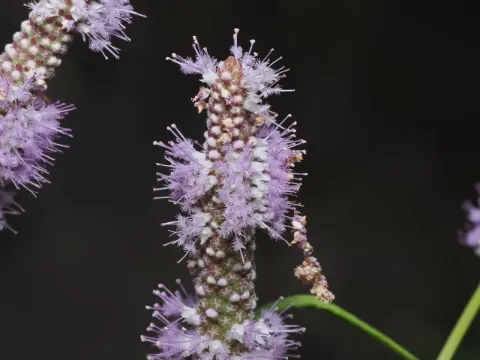
Patchouli
Pogostemon
Patchouli (Pogostemon cablin) is a perennial aromatic plant belonging to the Lamiaceae family. Since the plant rarely produces viable seeds, commercial cultivation is conducted almost exclusively through vegetative propagation using stem cuttings.
What the section contains

Patchouli
Healthy, vigorous shoots about 10–15 cm long are selected for propagation. These cuttings are placed in nurseries with high humidity and controlled temperatures to encourage rapid root development before they are transplanted to the field.
The timing of transplantation is critical and must coincide with warm, frost-free weather, as patchouli is highly sensitive to cold and can be easily damaged by low temperatures or chilling winds.
A typical planting density ranges from 20,000 to 30,000 plants per hectare. This spacing allows for optimal airflow and light penetration, which are essential for the production of dense foliage and high-quality essential oil.
Soil preparation is essential before planting. The soil should be deeply tilled, amended with organic matter, and leveled to ensure that there is no risk of waterlogging, which the plant cannot tolerate.
##requirements##Patchouli thrives in tropical climates, preferring temperatures consistently between 24 and 30 degrees Celsius. It requires high atmospheric humidity and is poorly adapted to dry, arid environments or cold conditions.
The ideal soil for patchouli is a fertile, well-drained loam or sandy loam with a pH ranging from 6.0 to 7.0. Drainage is the most important factor, as standing water will cause root decay and plant failure.
Regarding light, while the plant likes sunshine, it is sensitive to direct, intense tropical sun, which can cause leaf scorch. Providing partial shade or growing the plants under a canopy is often a recommended practice.
Consistent water supply is necessary for healthy growth. During dry spells, irrigation must be frequent to keep the soil moist but not waterlogged, as drought stress negatively impacts oil accumulation.
Nutrient management involves applying balanced fertilizers, with emphasis on nitrogen during the vegetative growth phase to maximize foliage production, and potassium to support plant health and oil synthesis.
##yield##Yield in patchouli farming is measured by the weight of harvested biomass per hectare. With proper management and fertilization, a healthy plantation can yield several harvests within a single calendar year.
An average plantation can produce 15 to 20 metric tons of fresh biomass per hectare annually. This fresh material is then dried, and the oil is extracted, typically yielding about 0.5% to 1% of essential oil by weight.
The economic life cycle of a patchouli plantation usually spans 3 to 5 years. After this period, the plants become less productive and the oil content decreases, necessitating the replanting of the field.
To ensure high yields, agronomists recommend regular pruning and careful monitoring of the plants to maintain vigorous regrowth. Proper site selection and crop rotation are also key to long-term productivity.
The total yield of essential oil depends heavily on the harvesting technique and the subsequent drying process. If the leaves are processed efficiently, the quality and yield of the final oil product are significantly improved.
##threats##Fungal diseases, such as root rot and wilt, are the primary threats to patchouli crops. These pathogens often thrive in poorly drained soils where moisture remains trapped for long periods.
Insect pests, including various leaf-eating caterpillars and beetles, can cause significant damage to the foliage. If left unchecked, these pests can drastically reduce the biomass available for harvesting.
Root-knot nematodes are another major concern, as they weaken the plant by attacking the root system, leading to stunted growth, yellowing leaves, and eventual decline of the plant population.
Integrated pest management, including the use of disease-free planting material, regular field inspections, and biological control agents, is recommended to keep pest populations at a manageable level.
Prevention is vital in patchouli farming. Maintaining a clean field environment, practicing proper crop rotation, and ensuring excellent soil aeration significantly reduce the risks of disease outbreaks.
##harvest##Harvesting patchouli involves cutting the top 25–30 cm of the stems, including the leaves, which are the main source of the essential oil. The first harvest usually occurs 5–6 months after planting.
Subsequent harvests can be conducted every 3 to 4 months as the plants regrow. Care must be taken during cutting to avoid damaging the base of the plant, which is crucial for future vegetative regeneration.
Post-harvest, the leaves should be dried in a shaded, well-ventilated area. Direct sunlight must be avoided to prevent the evaporation and degradation of the volatile aromatic compounds that give patchouli its unique scent.
Once dried to the appropriate moisture level, the plant material is sent for steam distillation. The oil is extracted by passing steam through the dried leaves, which helps release the essential oil trapped in the glandular trichomes.
Efficient handling from harvest to distillation is essential for quality. Proper storage of the dried leaves before distillation is necessary to maintain the integrity of the essential oil and ensure a high-market-value product.