
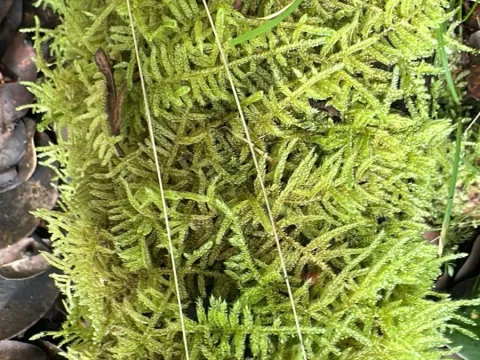
Hypnum
Hypnum
Hypnum is not a typical agricultural crop, so its propagation does not involve sowing seeds. Natural reproduction occurs via spores dispersed by wind or vegetatively through fragments of the thallus.
What the section contains
 Hypnum bambergeri
Hypnum bambergeri
Hypnum bambergeri
 Hypnum callichroum
Hypnum callichroum
Hypnum callichroum
 Hypnum cupressiforme
Hypnum cupressiforme
Hypnum cupressiforme
 Hypnum curvifolium
Hypnum hamulosum
Hypnum hamulosum
Hypnum curvifolium
Hypnum curvifolium
Hypnum hamulosum
Hypnum hamulosum
 Hypnum imponens
Hypnum imponens
Hypnum imponens
 Hypnum jutlandicum
Hypnum jutlandicum
Hypnum jutlandicum
 Hypnum lacunosum
Hypnum lacunosum
Hypnum lacunosum
 Hypnum mammillatum
Hypnum mammillatum
Hypnum mammillatum
 Hypnum resupinatum
Hypnum resupinatum
Hypnum resupinatum
 Hypnum revolutum
Hypnum revolutum
Hypnum revolutum
 Hypnum vaucheri
Hypnum vaucheri
Hypnum vaucheri
 Meadow hypnum
Hypnum pratense
Meadow hypnum
Hypnum pratense
Hypnum
In artificial conditions, propagation is carried out by dividing the sod into small fragments. The optimal time for establishing plantations is early spring or a rainy autumn, when air humidity promotes successful establishment.
The planting area must be cleared of weeds and fallen leaves beforehand. Fragments of moss are pressed firmly onto the substrate to ensure contact for rhizoid development.
A key factor during "sowing" is mulching or covering the area with garden fabric during the first weeks to maintain consistent humidity. Irrigation should be performed using a misting system to prevent displacement.
Planting density depends on the specific goals, but for rapid ground coverage, it is recommended to place fragments in a staggered pattern with a spacing of 5–10 centimeters.
Hypnum belongs to the Hypnaceae family and prefers shaded or semi-shaded areas with high humidity. Direct sunlight is harmful to the moss, causing the thallus to dry out rapidly.
Soil requirements include an acidic to slightly acidic pH range (4.5–6.0). The culture develops best on peat substrates, decaying wood, or moist loams.
Climatic preferences are limited to regions with a temperate climate. The moss exhibits high frost resistance and can endure freezing temperatures without losing viability.
For optimal growth, access to atmospheric moisture and the absence of chemical pollutants are critical. Hypnum is highly sensitive to soil salinity and excessive mineral fertilizers, which can be lethal.
In its natural habitat, it grows in various types of forests, forming extensive carpet-like colonies. Its ability to retain significant amounts of water makes it an essential component of the forest microclimate.
Productivity of Hypnum is measured by coverage area and the volume of biomass grown per season rather than mass yield. Under favorable conditions, the thallus can grow several centimeters per year.
In industrial harvesting, yield is estimated as dry or fresh mass per square meter. A plantation typically reaches a harvestable state 2–3 years after establishment.
Growth intensity depends on the availability of moderate levels of nitrogen and phosphorus. Over-fertilization with minerals slows development, making organic amendments more suitable.
To maintain productivity, partial harvesting is practiced, leaving the lower parts of the stems for regeneration. Complete removal of the sod leads to substrate erosion and slow recovery.
Maximum biological productivity is observed in regions with long periods of high air humidity and moderate temperatures throughout the growing season.
The main threat to the culture is a change in the hydrological regime; sudden drying of sites leads to colony collapse. Prolonged droughts accompanied by extreme heat are also highly dangerous.
Diseases in mosses are rare, but poor management can lead to mold infections. This occurs especially frequently when water stagnates and there is a lack of proper ventilation in closed areas.
Pests such as slugs and snails can feed on young moss patches, causing mechanical damage. In forest areas, anthropogenic impact, trampling, and air pollution pose significant risks.
Competition from higher plants, such as grasses and woody weeds, is a serious issue. Shading by fallen leaves in autumn can cause the lower layers of the sod to decay.
Atmospheric pollution with sulfur dioxide and heavy metals makes the moss unsuitable for use, as it actively accumulates toxins from the surrounding environment.
Harvesting is carried out manually or mechanically in dry weather to prevent biomass rot during storage. The harvested layers are carefully rolled up for transportation.
After collection, the moss is cleaned of debris, pine needles, twigs, and soil. It is important to maintain the integrity of the sod so that the product remains suitable for floristry or landscape design.
For long-term storage, the collected Hypnum is gently dried in the shade with good ventilation. In some cases, it is preserved using glycerin solutions to maintain elasticity.
Packaging of the finished material is performed using mesh bags or cardboard boxes that allow air circulation. Storage must occur in dry premises to prevent mold growth.
An important aspect of harvesting is adherence to environmental regulations. It is unacceptable to harvest sod from slopes prone to erosion, as this disrupts the soil structure.