
Meadow hypnum
Hypnum pratense
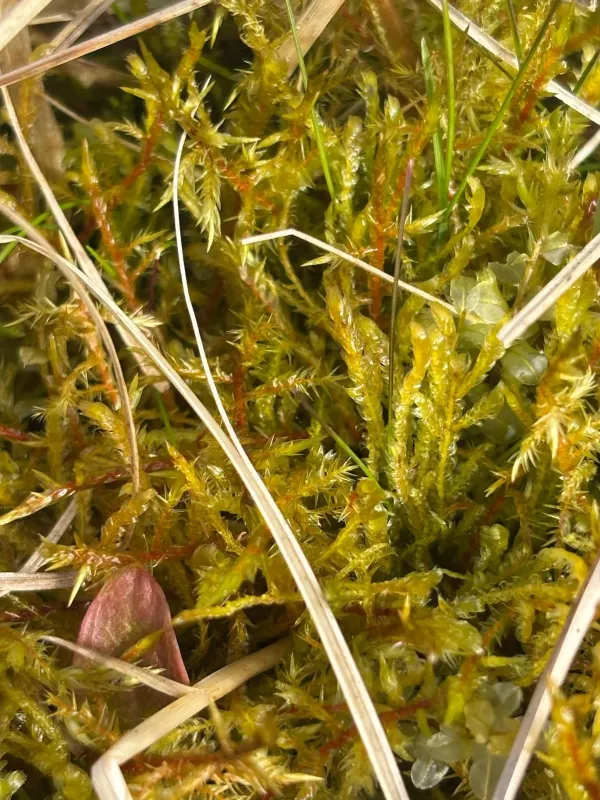
Description
Growing requirements
Meadow hypnum is a perennial green moss belonging to the Hypnaceae family. This plant forms dense, often soft mats, which can display a yellowish-green or golden hue depending on lighting conditions and humidity levels.
Biologically, this species is adapted to temperate climate zones of the Northern Hemisphere. It is primarily found in moist meadows, river floodplains, and areas with excessive moisture, where the soil maintains a stable, cool environment.
The plant prefers moderately acidic or neutral soils rich in humus but is capable of developing on mineral substrates with high groundwater levels. In an agronomic context, its presence often serves as an indicator of waterlogging or poor drainage.
An essential factor for the species' survival is protection from direct scorching sunlight, which is why it often selects shaded spots within grasslands or under forest canopy. The temperature regime must remain within moderate ranges characteristic of forest and forest-steppe zones.
To spread successfully, meadow hypnum requires stable air humidity, as it lacks a developed root system and absorbs water through the entire surface of its thallus. Intensive evaporation negatively affects its life cycle and vegetative propagation capacity.
Yield
The economic use of meadow hypnum is highly specialized. Unlike agricultural cereals, it does not produce commercial yields of grain or fodder, yet it performs critical ecological functions by retaining soil moisture.
In certain regions, this species is viewed as a component of natural phytocenosis, contributing to the accumulation of organic matter. Its yield is defined by its ability to rapidly cover an area under favorable, high-humidity conditions.
The volume of biomass produced directly depends on the quality of the local drainage system. Higher humidity levels, without water stagnation, allow this moss to form a denser and more voluminous carpet on the designated site.
In landscaping or soil restoration, meadow hypnum is valued for its resilience and aesthetic qualities. It creates a natural ground cover that effectively prevents soil erosion on low-lying, damp plots.
A promising area of application is using the moss as a mulching material in specialized nurseries, where maintaining a high level of substrate moisture is crucial for sensitive or rare plant species.
Main diseases and pests
The primary limiting factor for meadow hypnum is land drainage. Large-scale reclamation projects lead to the rapid disappearance of this species from agricultural lands.
Soil chemical treatments, particularly the application of herbicides and mineral fertilizers, exert a suppressive effect on moss development. Intensive mechanical cultivation completely destroys the mats, making the preservation of the plant on arable land impossible.
Pests, in the traditional sense, do not pose a major threat to this moss; however, excessive encroachment by higher vascular plants can create competition for light and space, eventually displacing the moss.
Environmental pollution with heavy metals or excessive salts negatively impacts the plant's physiology. As an indicator species, it is highly sensitive to any shifts in the ecological status of its habitat.
Natural risks include spring desiccation during sharp temperature fluctuations, when soil moisture is low but solar radiation increases significantly, leading to the dehydration of the thallus.