
Hypnum bambergeri
Hypnum bambergeri
Description
Growing requirements
Hypnum bambergeri is a perennial pleurocarpous moss belonging to the Hypnaceae family. It is recognized as a distinctive species of the arctic and alpine flora, highly adapted to cold and humid environments found in high latitudes.
The plant predominantly grows on calcareous rocks, limestone outcrops, and moist tundra soils. Its calciphilic nature is a defining trait, meaning it thrives specifically in substrates with an alkaline reaction, often found in mountain ranges and arctic territories.
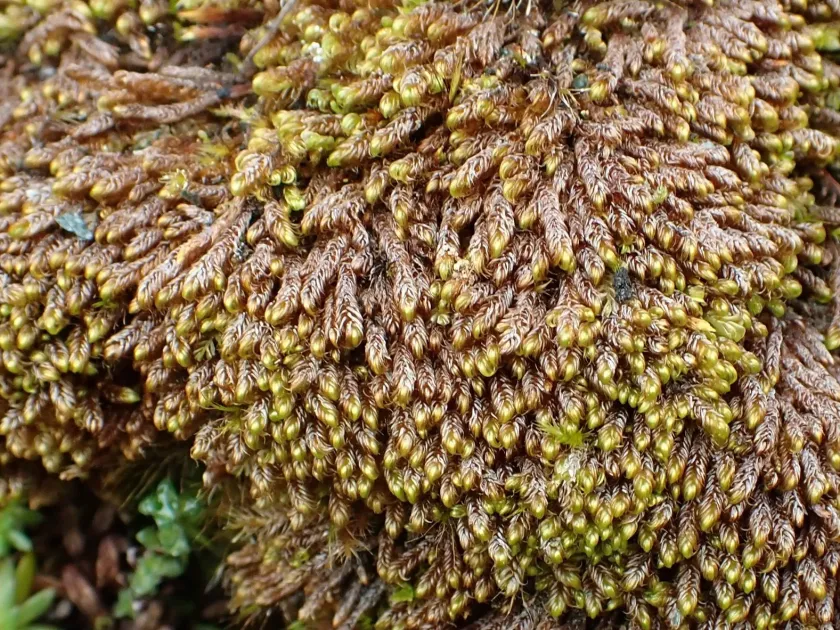
Botanically, it forms compact, golden-yellow to green mats. The stems are characterized by a pinnate branching pattern, an evolutionary adaptation that facilitates efficient water retention and stability against harsh winds.
Climatic requirements for Hypnum bambergeri include consistent cold temperatures and stable atmospheric moisture levels. Because of its extremely specific ecological niche, it is not utilized in industrial agriculture or cultivation.
The economic and research significance of this species is largely tied to ecological monitoring. It acts as a sensitive bioindicator, helping scientists evaluate the health and environmental integrity of fragile northern ecosystems.
Main diseases and pests
The most significant threat to the populations of Hypnum bambergeri is global climate change, which alters the permafrost stability and water availability in its natural habitat.
Human activities, including mining operations and soil disturbances in arctic regions, directly contribute to the loss of biodiversity and the destruction of the moss's specific microhabitats.
Biological competition poses a growing risk as climate warming allows vascular plants to encroach upon areas previously dominated by mosses and lichens.
While specific diseases of this bryophyte remain under-researched, physiological stress caused by unpredictable freezing and thawing cycles can lead to tissue damage in the mats.
Invertebrate pests, such as certain species of collembolans, can cause localized damage to the moss stems, which is particularly detrimental given the slow growth rate of the species.