
Ptilium crista-castrensis
Ptilium crista-castrensis
Description
Growing requirements
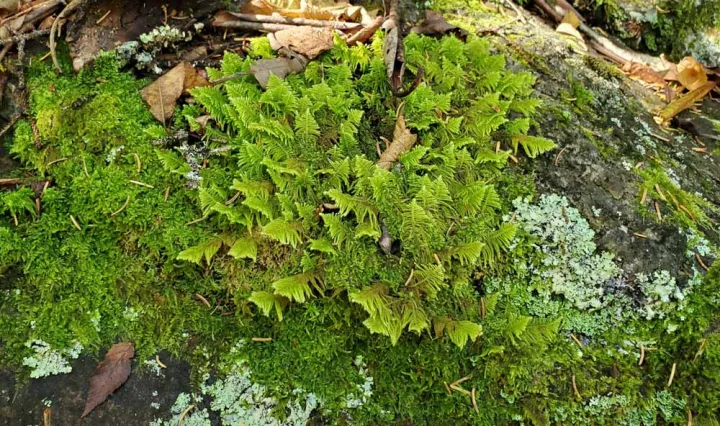
Ptilium crista-castrensis, commonly known as knight's plume moss, is a significant member of the Hypnaceae family. It is recognized for its distinctive, regularly pinnate branching, which gives the stems the appearance of a bird's plume.
This species is highly demanding regarding its environment, requiring consistent moisture levels and protection from direct sunlight. It is primarily found in the understory of dense coniferous forests where atmospheric humidity remains high.
The moss thrives on moist, acidic, and nutrient-rich forest floors. It often colonizes decaying logs and soil rich in organic matter, forming extensive, lush carpets that help retain soil moisture.
The geographic distribution of the species is circumboreal, spanning temperate and arctic regions of North America, Europe, and Asia. It acts as a critical component of the ground vegetation in boreal forest biomes.
While not a commercial agricultural crop, the species is essential for ecological stability. It plays a vital role in preventing soil erosion and facilitating the decomposition of organic materials within the forest floor cycle.
Main diseases and pests
The primary threats to this moss species are linked to large-scale deforestation, which drastically alters the forest microclimate necessary for its survival.
Increased temperatures resulting from climate change pose a significant risk, as Ptilium crista-castrensis relies on cool, temperate conditions to maintain its physiological functions.
Excessive trampling by humans or animals can damage the delicate stems and disrupt the cohesion of the moss carpet, leading to site degradation.
Air pollution, specifically high levels of nitrogen deposition or acid rain, can severely inhibit the growth and reproduction of this bryophyte species.
- Destruction of forest canopy cover.
- Alteration of hydrology and soil moisture content.
- Increased frequency of forest fires.