
Pylaisiella polyantha
Pylaisiella polyantha
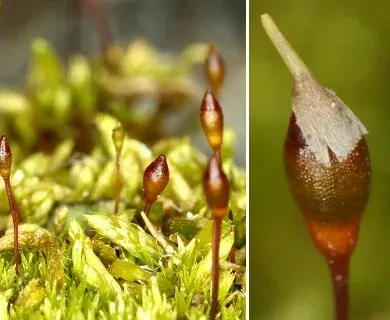
Description
Growing requirements
Pylaisiella polyantha is a notable species of moss belonging to the family Pylaisiaceae. It is characterized by its prostrate, pinnately branched stems that create shiny, dense mats, often appearing in vibrant shades of yellowish-green. This plant is a typical example of an epiphytic bryophyte.
The distribution of this species spans across the temperate regions of the Northern Hemisphere, including vast parts of Europe, Asia, and North America. It is commonly found in deciduous and mixed forests, where it occupies the trunks and branches of various tree species like alder, aspen, and willow.
The plant thrives in environments with high atmospheric humidity. As an epiphyte, it relies on rain, fog, and moisture in the air to survive. Its ability to photosynthesize effectively under varying light conditions allows it to occupy diverse niches within the forest canopy and lower trunks.
Soil quality is of secondary importance to Pylaisiella polyantha compared to bark surface conditions. The texture, age, and chemical composition of the host tree bark are the primary factors that determine the success of colonization. Older trees with rougher bark provide better anchorage.
Climatic adaptability is one of its strongest features. The moss can withstand harsh winter conditions through dehydration-tolerant mechanisms. During periods of extreme cold or drought, it enters a dormant state, resuming growth rapidly once favorable environmental conditions are restored.
Main diseases and pests
Air pollution is the most significant threat to the stability of Pylaisiella polyantha populations. As a moss that absorbs nutrients and moisture from the air, it is highly susceptible to the accumulation of heavy metals and acidic compounds, which can lead to metabolic collapse.
Deforestation and forest management practices that prioritize the removal of older trees directly destroy the habitat for this species. Without suitable host trees that offer the necessary bark structure and micro-climate, the moss is unable to sustain its population and spread to new areas.
Climate change, manifesting in prolonged droughts and altered precipitation patterns, poses a direct risk. A decrease in average annual humidity significantly impacts the reproductive success of the moss, as spores and gametes require sufficient moisture to complete their life cycles.
Biological threats include the loss of host trees due to pests or fungal pathogens. When the integrity of the host tree is compromised, the bark loses its specific physical properties, making it unsuitable for the moss colony to persist on the surface of the bark.
Habitat fragmentation and the encroachment of urban areas negatively affect local micro-climates. The drying effect of nearby paved surfaces and industrial heat islands reduces the local humidity levels, making it difficult for sensitive species like Pylaisiella polyantha to survive.