
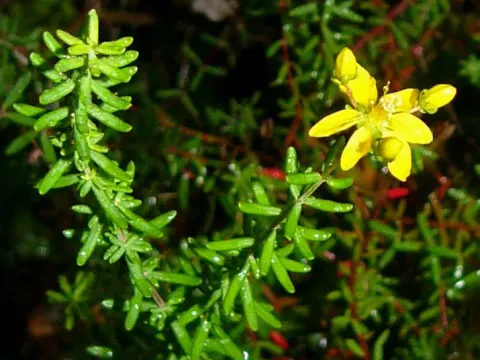
Hypericum amblycalyx
Hypericum amblycalyx
Hypericum amblycalyx is a perennial flowering plant belonging to the Hypericaceae family. It is distinct from other species in the genus due to its obtuse, rounded sepals, which serve as a primary taxonomic marker for identification.
What the section contains
Hypericum amblycalyx
The plant originates from the Aegean region, specifically endemic to certain Greek islands. Its natural habitat consists of rocky slopes and open, sunny areas where the soil is typically poor in nutrients but possesses excellent drainage capabilities.
To cultivate this species successfully, growers must mimic Mediterranean conditions. The plant requires full sun exposure for most of the day, as reduced light intensity can negatively impact the synthesis of secondary metabolites within the plant tissues.
Soil requirements are strict regarding drainage. It thrives in stony or sandy loams with a neutral to slightly alkaline pH. Clay-heavy or water-retentive soils must be amended with grit or perlite to prevent root rot, which is the most significant physiological risk for this crop.
Agronomic management involves minimal irrigation once the plants are established. Fertilization should be strictly limited, as the species is adapted to nutrient-poor environments and excessive nitrogen can result in succulent, weak growth prone to pathogen attack.
The primary threats to Hypericum amblycalyx include soil-borne fungi such as Fusarium and Rhizoctonia, particularly in instances where soil moisture is not managed effectively. Overwatering remains the most common cause of plantation failure.
Pest threats include mites and various leaf-chewing insects common to the Hypericaceae family. Sustainable control involves periodic monitoring and the use of integrated pest management strategies to maintain the health and essential oil content of the harvest.