
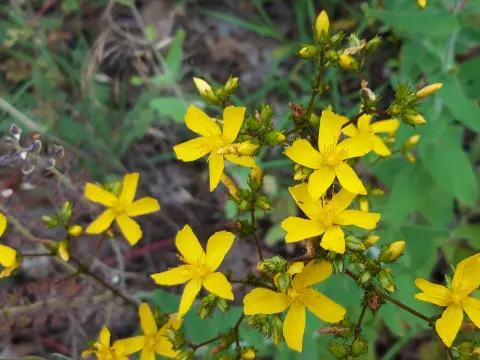
Hypericum annulatum
Hypericum annulatum
Sowing Hypericum annulatum requires a well-prepared seedbed during early spring or late autumn. The soil should be finely crumbled to ensure good contact with the tiny seeds, which are shallowly sown at a depth of 0.5 to 1 cm.
What the section contains
Hypericum annulatum
Optimal spacing for row planting should range from 45 to 60 cm. This distance is vital for facilitating mechanical weeding and ensuring that plants receive adequate sunlight, which is necessary for uniform development.
For regions with shorter growing seasons, starting plants in greenhouses as seedlings is recommended. Seedlings can be transplanted to the field after 6–8 weeks, once the risk of spring frost has fully passed.
Maintaining consistent moisture in the upper soil profile is critical during the initial germination phase. If the soil surface dries out too quickly, the emergence of the crop will be significantly hampered.
Weed management immediately following sowing is crucial, as the seedlings of this species grow slowly during the first several weeks. Using a light cover or mulch can help suppress weeds while providing a stable microclimate.
Hypericum annulatum, a member of the Hypericaceae family, thrives in sunny, open locations. Insufficient light levels will lead to a decrease in the production of essential phytochemicals and lower overall biomass.
The ideal soil conditions are sandy loams or well-draining loamy soils with a pH ranging from neutral to slightly acidic. Poor drainage is a major cause of crop failure, as the plant is highly sensitive to root asphyxiation.
This crop prefers moderate temperatures, ideally between 20–25 degrees Celsius during the peak of the growing season. It exhibits good tolerance to various climatic conditions but benefits from protection against extreme heat.
While the plant is somewhat drought-tolerant once established, regular irrigation during dry spells is recommended to maximize the quantity of medicinal harvest. Over-watering, however, should be strictly avoided.
Fertilization should be applied according to soil nutrient testing, focusing on maintaining adequate phosphorus and potassium levels. Proper soil aeration through regular hoeing is an essential part of daily field maintenance.
The primary economic output of Hypericum annulatum is its aerial flowering parts, which are highly valued in the pharmaceutical industry. Maximum production levels are typically reached during the second and third years of plantation.
Expected yields for dried biomass can reach 2 to 3 tons per hectare under intensive management. The timing of the harvest is the most significant factor affecting the quality and market value of the final product.
The bio-concentration of active ingredients is highest during the full bloom phase. Therefore, farmers must synchronize harvesting schedules with the peak flowering period to ensure high-grade raw material production.
Economic longevity of a field is generally between 4 to 6 years. After this period, plant density and secondary metabolite production usually decline, necessitating a rotation to a new site for subsequent planting.
Standardized post-harvest drying processes, including controlled temperature settings, are necessary to preserve the plant's delicate active ingredients and prevent oxidation of the essential oils.
The most common biological threats to this crop include fungal pathogens, particularly powdery mildew and leaf spot diseases. These are often triggered by high humidity levels and poor air circulation within the canopy.
Root rot and crown rot, caused by various soil-borne fungi, can lead to sudden plant death. These issues are best managed by ensuring excellent soil drainage and implementing a strict crop rotation strategy.
Pests like aphids and certain beetle species can cause physical damage to the leaves and developing buds. Integrated pest management (IPM) practices should be employed to minimize chemical dependency.
Competitive pressure from fast-growing weeds can significantly reduce yield. Mechanical weeding remains the most effective way to control unwanted vegetation without compromising the purity of the medicinal herb.
Strict hygiene in the field is necessary to prevent the spread of diseases. Removing and destroying infected plant debris after the harvest helps lower the inoculum load for the following season.
Harvesting should occur at the peak of the flowering stage, usually when the majority of flowers are fully opened but before the fruit sets. This provides the ideal ratio of plant constituents.
Stems must be cut at a height of 10–15 cm above the ground. This specific height is critical because it leaves enough foliage and buds for the plant to recover and survive through the winter dormancy.
For commercial farms, mechanical harvesters are essential for efficiency. The crop should be collected in a way that minimizes crushing or mechanical damage to the flowers, which are the most valuable part.
Immediate transportation to the drying facility is required to maintain the quality of the raw material. Avoiding piles of fresh biomass prevents fermentation and excessive heating of the harvested product.
The final dried product should retain its color and aromatic properties, which are hallmarks of high-quality medicinal stock. Storage must be done in cool, dry, and well-ventilated areas to avoid moisture gain.