
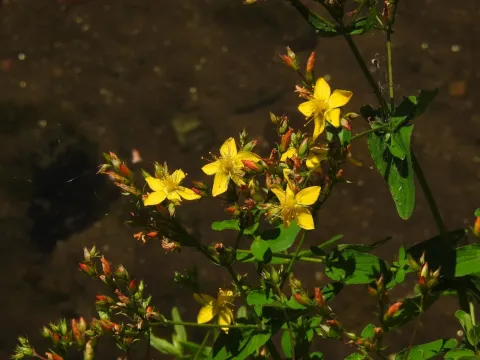
Wavy St. John's-wort
Hypericum undulatum
The sowing of Hypericum undulatum should ideally occur in early spring, once the soil temperature consistently reaches 8-10 degrees Celsius. Because the seeds are exceptionally small, they must be sown superficially, ensuring they are only lightly pressed into the surface or covered with a thin dusting of sand.
What the section contains
Wavy St. John's-wort
In regions with milder climates, late autumn sowing is an effective strategy that allows the seeds to undergo natural stratification. This preparation significantly enhances the uniformity of germination when spring temperatures eventually rise.
For efficient field management, rows should be spaced 45-60 centimeters apart. This spacing is vital for providing adequate room for root development and facilitates mechanical or manual inter-row cultivation throughout the growth cycle.
Early development is slow, making the first month after emergence the most critical period. Growers must ensure the fields remain free of competing weeds, as the young seedlings are easily suppressed by aggressive invasive species.
In commercial operations, the seeding rate is typically adjusted based on local soil conditions and seed purity. Avoiding over-density is paramount, as crowding restricts airflow and increases the susceptibility to humidity-related diseases.
Hypericum undulatum, a member of the Hypericaceae family, thrives best in moderately moist, well-drained soils. The plant shows high sensitivity to waterlogging, and heavy clay soils that retain excess moisture should be avoided to prevent root system decline.
This species requires high levels of solar exposure to maximize the accumulation of its therapeutic metabolites. Fields should be situated in open, unshaded locations to ensure the plant reaches its full potential for essential oil and flavonoid production.
The optimal soil pH range for this crop is between 5.5 and 7.0. While the plant is hardy, it responds exceptionally well to soil enriched with organic matter, provided that nitrogen levels are balanced to encourage foliage rather than just vegetative mass.
Climatic requirements focus on stability, as drastic temperature shifts and prolonged droughts can stress the plant and reduce its yield. In dry seasons, supplementary irrigation systems, particularly during the budding phase, are highly recommended.
Field maintenance involves routine weeding and soil aeration to promote a healthy rhizome system. Proper hygiene in the fields, including the removal of old crop residues, helps in mitigating the build-up of soil-borne pathogens over time.
Yield productivity for Wavy St. John's-wort is heavily dependent on maintaining optimal plant health during the flowering stage. Under ideal agricultural conditions, farmers can expect a harvest of 1.5 to 3 tons of dried biomass per hectare per season.
Harvesting timing is essential for quality, as the concentration of active compounds, including hypericin and various antioxidants, peaks precisely during the mass flowering period. Early or late harvesting can result in inferior pharmaceutical grade raw material.
As a perennial crop, a single plantation can yield consistent results for approximately 3 to 5 years. After this period, plant density typically decreases, necessitating crop renewal to keep the field output at a professional standard.
Mechanical or manual harvesting is conducted by cutting the upper leafy portions of the stems, leaving about 10-15 centimeters above the soil. This technique ensures that the crown of the plant remains intact, allowing for successful winter survival and regrowth.
Immediate drying is required post-harvest in ventilated facilities or controlled-temperature drying chambers. Keeping the temperature below 45 degrees Celsius is crucial to preserve the integrity of the plant's volatile oils and medicinal constituents.
The crop faces pressure from several leaf-eating insects, particularly during the mid-summer months. Regular scouting is the best defense, allowing growers to address potential infestations before they cause significant defoliation of the plants.
Fungal diseases, especially Fusarium wilt, represent a major threat when soil moisture levels are poorly managed. Infected plants should be promptly excavated and removed to prevent the pathogen from spreading through the soil to neighboring specimens.
Gray mold can be problematic during periods of persistent rain or high humidity. Managing plant density and ensuring good field ventilation are effective cultural controls to keep the foliage dry and reduce the likelihood of fungal colonization.
Rust diseases can affect both the aesthetic quality and the chemical potency of the harvested herb. Using high-quality, certified seeds and maintaining appropriate distance from wild host plants can significantly decrease the risk of rust outbreaks.
Nematodes are a persistent subterranean threat that can stunt growth and weaken the plant's overall vitality. Crop rotation and the avoidance of planting on soil with a history of nematode infestations are essential preventative practices for any grower.