
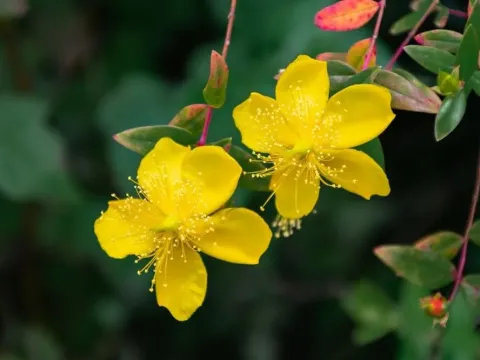
Arnold's St. John's wort
Hypericum arnoldianum
Sowing of Hypericum arnoldianum is best conducted in early spring once soil temperatures reach 10-12 degrees Celsius. Alternatively, late autumn sowing can be performed to allow for natural seed stratification over the winter.
What the section contains
Arnold's St. John's wort
The seeds of this culture are extremely fine, requiring a shallow planting depth of no more than 0.5 to 1 centimeter. Row spacing should be maintained at 45-60 centimeters to ensure adequate space for plant development.
Maintaining consistent moisture in the upper soil layer is crucial for successful germination. Typically, seedlings emerge within 14-20 days following sowing, provided the soil remains sufficiently warm and moist.
In the first year, growth is characteristically slow, with the plant focusing on root system and rosette formation. Thinning is performed at the 2-3 leaf stage, spacing plants at 20-30 centimeters apart to prevent overcrowding.
Using mulch immediately after sowing helps protect the tiny seeds from being washed away and keeps the surface from crusting. This practice is essential for establishing a uniform and healthy plant stand.
Arnold's St. John's wort thrives in full sun, requiring open sites with high solar exposure. Shading can negatively impact the concentration of secondary metabolites, which are vital for its medicinal value.
The culture performs best in well-drained loamy or sandy soils with a neutral or slightly acidic pH level. Proper drainage is mandatory to prevent root rot, as the species does not tolerate stagnant water.
While the plant exhibits good cold hardiness common to the Hypericum genus, young seedlings require protection during their first winter. Establishing a sheltered location can protect the crop from severe wind-desiccation.
Optimal growth occurs at temperatures between 20-25 degrees Celsius. Regular soil aeration through shallow cultivation is necessary to maintain root health and prevent compaction in the inter-row areas.
Integrated weed management is crucial during the establishment phase, as the plant competes poorly with aggressive weeds. By the second year, the root system becomes robust enough to suppress most competitive weeds.
The agricultural yield of dried herb mass typically ranges from 1.5 to 2.0 tonnes per hectare. Productivity varies significantly based on site-specific soil fertility, management intensity, and plantation age.
Peak production is usually observed during the third and fourth years of the plantation. After this point, the plants often become woody and lose vigor, necessitating the establishment of new fields for optimal output.
Harvesting is performed during mass flowering, which is the stage when flavonoid and hypericin concentrations are at their highest. Precision timing is key to maintaining high-quality medicinal standards.
Fertilization with phosphorus and potassium in early spring can significantly boost yield. Nitrogen should be applied sparingly, as over-fertilization may lead to excessive foliage growth at the expense of active ingredient potency.
Effective drying is a critical step; the harvested material should be dried in a well-ventilated, shaded environment. This process preserves the chemical integrity and color profile of the plant materials.
The most significant threats to the crop include fungal infections like rust and powdery mildew. These diseases occur primarily under conditions of high humidity or poor field ventilation.
Pests, particularly leaf-eating beetles, can cause localized damage, reducing the plant's photosynthetic capacity. Regular scouting of the fields is essential to identify infestations before they cause significant economic loss.
Root rot, caused by various soil-borne fungi, often stems from poor drainage or excessive irrigation practices. Crop rotation and avoiding waterlogged areas are the primary preventative measures.
Invasive weed species can quickly colonize the space between plants, competing for resources. Maintaining clear and weed-free rows is essential for preventing the spread of diseases often carried by common field weeds.
- Regular inspection of the plant canopy.
- Adherence to strict crop rotation intervals.
- Removal of infected debris after harvest.
Harvesting is conducted by cutting the top 25-30 centimeters of the stem, including the flowering tops. Using sharpened equipment is necessary to ensure clean cuts, which allows for faster plant recovery.
The optimal harvest time is mid-morning, once dew has evaporated but before the heat of the day reaches its peak. This helps ensure that the concentration of volatile oils remains intact.
Cut material should never be left in piles, as it undergoes rapid fermentation and self-heating, which ruins the quality of the pharmaceutical raw material. Efficient logistics to the drying facility are essential.
Mechanical harvesters adjusted for the correct height are used in larger commercial fields to improve efficiency. These machines help ensure a consistent raw product with minimal handling and damage.
Post-harvest processing involves sorting, cleaning of impurities, and separating woody stems from the high-quality flowers and leaves. The final product should be stored in cool, dark, and dry conditions to maintain shelf life.