
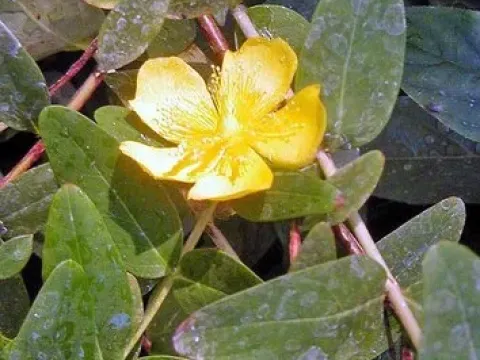
Hypericum reptans
Hypericum reptans
Hypericum reptans, a member of the Hypericaceae family, is a low-growing, mat-forming perennial known for its decorative foliage and bright yellow flowers.
What the section contains
Hypericum reptans
Propagation is primarily vegetative; cuttings taken in late spring or summer root easily in moist, well-draining substrate, making it a favorite for rapid coverage.
Seeds can be sown in early spring in greenhouses, but they require cold stratification to break dormancy and ensure uniform germination.
The planting of rooted cuttings should take place in late spring, allowing the root system to establish thoroughly before the onset of the winter dormancy period.
Spacing during planting is crucial; individual plants should be placed 20–30 cm apart to facilitate the creation of a dense, weed-suppressing carpet within a single season.
This species thrives in sunny locations but adapts well to partial shade, where its foliage remains lush even if the flower density is slightly reduced.
It demands well-drained soil, as it is highly susceptible to root rot if waterlogged, especially during the dormant winter months when transpiration is low.
Neutral to slightly acidic soil enriched with organic compost provides the best nutrients for vigorous growth and long-lasting seasonal performance.
Regular but moderate watering is necessary during the establishment phase and prolonged dry spells to ensure the survival of the shallow root system.
While relatively hardy, in areas with harsh winters, a light mulch of organic material around the base is recommended to protect the creeping stems from frost heaving.
The primary yield of this plant is its ornamental value, measured by its ability to provide a uniform, low-maintenance ground cover for landscapes.
During the flowering season, the plant produces an abundance of golden-yellow blossoms that contrast beautifully with its small, dark green leaves.
Hypericum reptans is exceptionally efficient at covering rocky outcrops, slopes, and borders, effectively preventing soil erosion through its creeping habit.
Its productivity is maximized in open, well-ventilated settings where the creeping stems can freely root at the nodes, expanding the plant's footprint over time.
When used in xeriscaping or rock gardens, it provides high aesthetic returns with minimal input, remaining a staple choice for landscape designers.
The most common health issues involve fungal infections like powdery mildew, which can appear if the plant is grown in overly humid or stagnant air conditions.
Pests such as aphids and spider mites can occasionally affect the tender new growth, particularly during early summer when the plant is pushing out new shoots.
Maintaining proper hygiene by removing dead foliage and ensuring sufficient spacing between plants significantly reduces the risk of disease spread.
Should an infestation occur, systemic insecticides or targeted biological controls are recommended to preserve the integrity of the ground cover.
- Powdery mildew
- Rust disease
- Root rot (Phytophthora)
- Aphids