
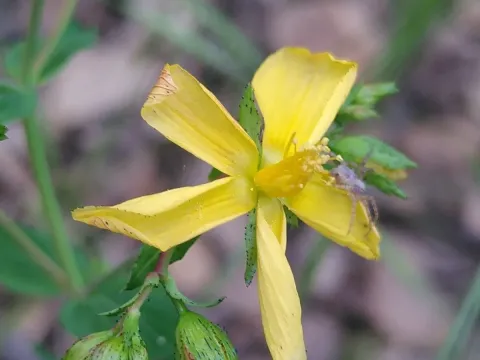
Southern St. John's wort
Hypericum australe
Sowing Southern St. John's wort in agricultural practice is typically performed in late autumn or early spring to ensure optimal germination and seedling development.
What the section contains
Southern St. John's wort
Autumn sowing is often preferred as it allows the seeds to undergo natural stratification in the soil, which significantly improves the germination rate and vigor in spring.
The planting pattern involves row seeding with inter-row spacing of 45 to 60 centimeters, facilitating mechanical weeding and aeration during the first vegetative season.
Because the seeds are extremely small, they should be sown at a shallow depth of approximately 0.5 to 1 centimeter to ensure sufficient light penetration and moisture.
Post-sowing soil compaction is recommended to establish good seed-to-soil contact, which is crucial for preventing the seeds from drying out in the topsoil layer.
Southern St. John's wort belongs to the Hypericaceae family and thrives in well-drained, fertile soils with a neutral or slightly acidic pH level for best results.
This crop is highly heliophilic, meaning it requires full exposure to sunlight throughout the day to accumulate the necessary levels of active biological compounds.
The species demonstrates moderate drought tolerance, but consistent soil moisture is vital during the peak growing phase to achieve a marketable biomass yield.
Optimal development occurs in temperate climates with temperatures ranging between 18 and 25 degrees Celsius, showing strong resilience to various environmental stressors.
Proper drainage is essential, as waterlogged conditions pose a significant risk to root health, often leading to fungal decay and poor plantation establishment.
Yield potential is highly dependent on agricultural inputs, soil fertility management, and the age of the plantation, with peak performance usually reached after the first year.
Farmers can typically expect a yield of 3 to 5 tons of dry biomass per hectare, provided that irrigation and nutrient management practices are strictly followed.
Maximum harvest efficiency is achieved when plants are harvested during the peak blooming stage, ensuring a high concentration of hypericin and flavonoids.
Regular fertilization with balanced NPK nutrients during the vegetative stage is recommended to promote robust stem growth and maximize the overall medicinal yield.
Proper management of the field density and weed control significantly influences the final harvest weight, as competitive pressure can severely limit the plant's growth.
Common agricultural threats include fungal pathogens such as Fusarium wilt and powdery mildew, which thrive in high-humidity conditions or poorly ventilated fields.
Insect pests, including leaf-eating beetles and aphids, may occasionally attack the foliage, necessitating integrated pest management strategies to protect the crop.
Crop rotation is the most effective preventive measure, as it disrupts the life cycles of soil-borne pathogens that might otherwise accumulate in the field over time.
Biological control agents are preferred over synthetic pesticides to maintain the high quality of the medicinal product and adhere to safety standards for herbal goods.
Regular field scouting allows for early detection of diseases or pest outbreaks, ensuring that intervention occurs before significant economic damage is inflicted on the harvest.
Harvesting is performed mechanically during the mass flowering period, using cutters set to a height of 10–15 centimeters to allow for plant regeneration.
Immediate drying is required after harvest to prevent heating and fermentation, which can rapidly degrade the chemical properties of the raw botanical material.
Drying must be conducted in specialized, temperature-controlled facilities, keeping temperatures below 45 degrees Celsius to preserve the plant's natural color and integrity.
After the drying process is complete, the herb is cleaned of any extraneous stems or organic debris and prepared for final packaging into protective containers.
Long-term storage should be done in cool, dark, and well-ventilated areas to minimize the degradation of active compounds caused by light and environmental humidity.