
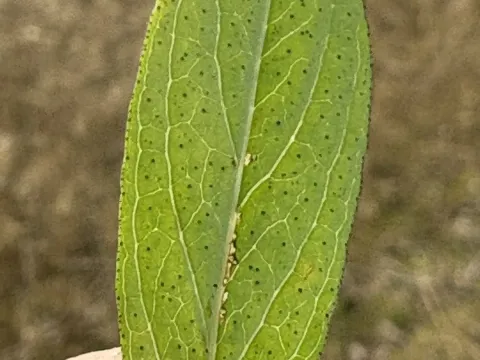
Spotted St. John's wort
Hypericum punctatum
Spotted St. John's wort (Hypericum punctatum) is a hardy perennial herb belonging to the Hypericaceae family. It is typically propagated through seeds, which require specific conditions for successful germination.
What the section contains
Spotted St. John's wort
Sowing in autumn is highly recommended to allow for natural cold stratification during winter. This process significantly increases the percentage of germinating seeds in the following spring.
Seeds are extremely small and should be sown shallowly, barely covered with fine soil or sand. Ensuring good contact between the seed and the soil surface is critical for early establishment.
In a field setting, rows should be spaced about 50 to 60 centimeters apart. This spacing facilitates mechanical weeding and ensures adequate airflow between plants to prevent fungal infections.
Once seedlings emerge, thinning is performed to maintain a spacing of roughly 20-30 centimeters between individual plants. This encourages the development of robust, bushy specimens.
The plant thrives in locations with full sun to partial shade. However, optimal biomass production and secondary metabolite accumulation occur in full sunlight conditions.
It adapts well to a variety of soil types, ranging from sandy loams to heavier clays, provided that the soil is well-drained. Poor drainage is the most significant limiting factor for growth.
The species prefers a slightly acidic to neutral soil pH, typically between 5.5 and 7.0. Adding compost during soil preparation is beneficial for improving nutrient availability and moisture retention.
While the plant exhibits moderate drought tolerance once established, consistent moisture is required during the first year of growth to ensure the development of a healthy root system.
During winter, the plant goes dormant. It is highly winter-hardy, but young plantations may benefit from a layer of mulch in regions with extreme temperature fluctuations and lack of snow cover.
A plantation typically reaches its peak yield capacity in the second or third year. Productive life span of the crop is usually between 5 and 6 years before replanting is necessary.
Average yield of dried aerial parts can reach 2 to 3 tonnes per hectare under optimal management. High-density planting and proper fertilization significantly influence these numbers.
Regular maintenance, including weeding and thinning, is essential to maximize yield. Weed competition in the initial growth stages can significantly stunt the crop's development.
Applying phosphorus and potassium fertilizers after the first harvest can stimulate regrowth and improve the quality of the second crop in the same season.
Harvesting efficiency is maximized by using specialized machinery for cutting, though manual harvesting is often preferred for small-scale operations to ensure higher product purity.
Powdery mildew represents a primary threat, especially in humid conditions with poor ventilation. Maintaining open spacing is the best cultural defense against this pathogen.
Root rot, caused by various soil-borne fungi, occurs primarily in waterlogged areas. Proper site selection and drainage improvement are the most effective prevention measures.
Various insects, including leaf beetles and moth larvae, can infest the foliage during the summer months. Monitoring is required during the budding phase to prevent significant leaf damage.
Integrated pest management strategies are recommended, focusing on biological controls rather than chemical pesticides to maintain the medicinal quality of the plant material.
Early intervention through manual removal of affected stems or localized treatment helps keep the overall population of pathogens and pests within acceptable limits.
Harvesting should occur during the full bloom phase when the concentration of hypericin and other active compounds is at its highest in the flowers and leaves.
The stems are typically cut 10-15 centimeters above the ground. This ensures that the base of the plant remains intact for successful regrowth in subsequent seasons.
Drying must begin immediately after harvest to prevent enzymatic degradation. The material is dried in shaded, ventilated areas at temperatures not exceeding 45°C.
Uniform drying is achieved by spreading the herb in thin layers and turning it regularly. This process preserves the characteristic color and quality of the medicinal product.
After the material is fully dried and brittle, it is processed, screened for impurities, and packaged in airtight containers to preserve potency until distribution or extraction.